
The Basics
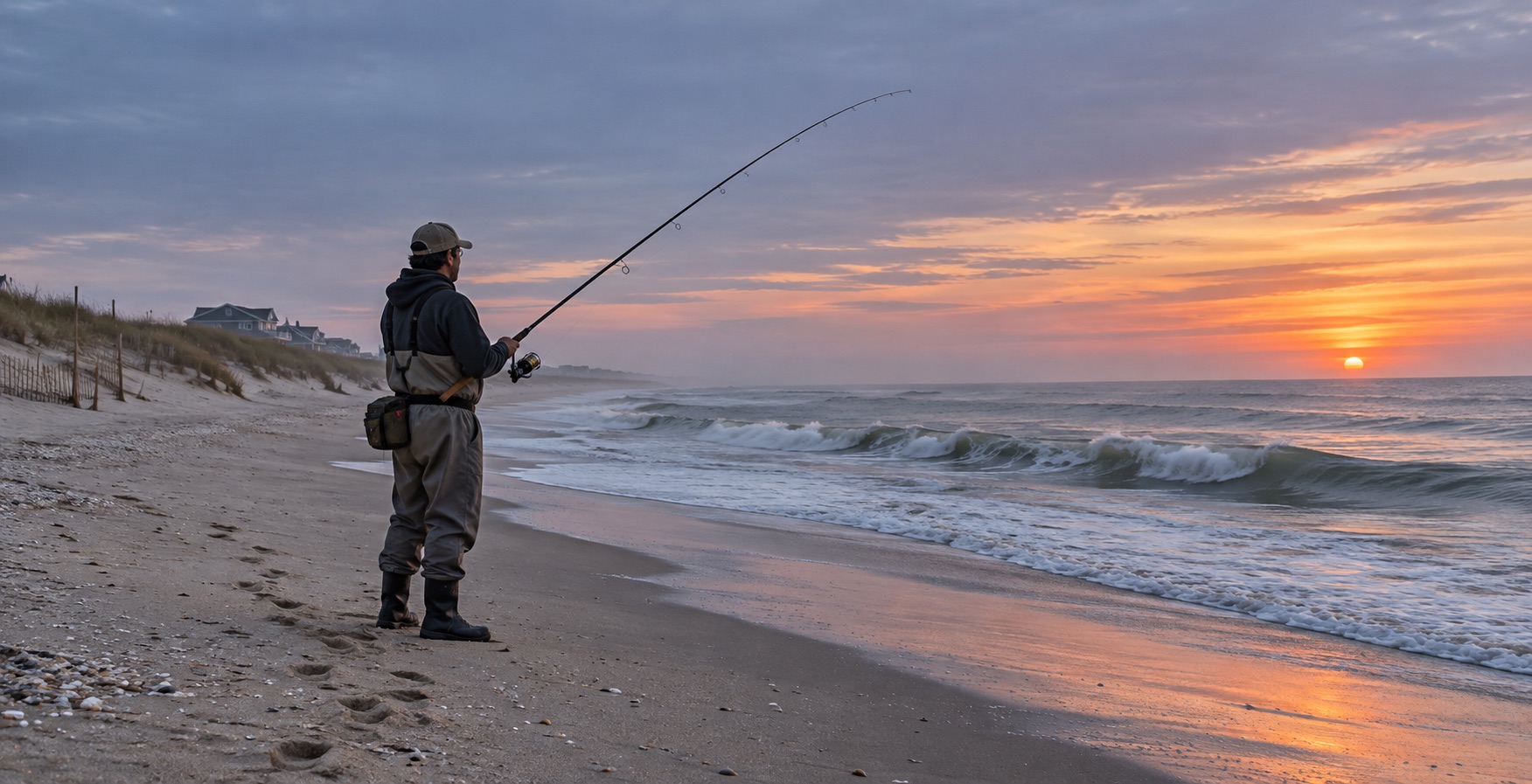
From Sandy Hook to Cape May, New Jersey offers great surf fishing opportunities. The Jersey Shore is home to a wide variety of species, including striped bass, bluefish, fluke, weakfish, kingfish, black drum, and false albacore. And unlike fishing from a boat, you don't need much more than a rod, some tackle, and access to a beach to get started. That said, surf fishing in New Jersey can be intimidating. The coastline is long, the fish move throughout the year, and there are seemingly endless beaches, inlets, jetties, and bays to choose from. The good news? You don't need to know a secret fishing spot to catch fish. You just need to understand what you're looking for.
This guide breaks down everything you need to know to get started, from New Jersey fishing regulations and gear setups to reading the beach, finding bait, choosing the right technique, understanding seasonal fish movements, and figuring out when conditions are most likely to produce. Let's get right into it.
New Jersey Fishing Rules & Regulations
Do I need a fishing license to surf fish in New Jersey?
No. Unlike most other states in the US, New Jersey doesn't require a recreational saltwater fishing license. Instead, New Jersey requires all anglers 16 or older to register with the NJ Saltwater Recreational Registry Program (NJSRRP). The registration is free and must be completed online.
Important Notes:
- Freshwater: New Jersey does require a fishing license for freshwater fishing (This is separate from the saltwater registry)
- Shellfish: If you want to harvest shellfish such as clams, oysters, mussels, or bay scallops, you'll need the appropriate shellfish license. Recreational crab-pot and trot-line fishing also has separate licensing requirements
Can I keep the fish I catch?
Yes, but what you can keep depends on the species. New Jersey sets different size limits, possession limits, seasons, and other restrictions for different fish. Striped bass, fluke, bluefish, black drum, weakfish, sharks, and other popular surf-fishing species all have their own rules. For example, almost all species need to be above a certain length before you can legally keep them, and some species have a daily possession limit that restricts how many you can take home. Other species may have seasonal closures or additional restrictions. Regulations can change frequently, so don't rely on an old chart or something your buddy told you last season. Everyone, especially if you're new to surf fishing, should review all the rules and regulations on New Jersey’s Fish & Wildlife Website.
Few other callouts:
- Keep a copy of the latest New Jersey Marine Digest on your phone. It's much easier to check the rules before you put a fish in the cooler than it is to figure them out afterward.
- Striped bass have additional regulations, including specific requirements around how they can be caught and handled. If you're targeting stripers, make sure you understand all the requirements before fishing. New Jersey requires non-offset (inline) circle hooks when fishing for striped bass with bait.
Gear and Tackle
There are two fundamental approaches to surf fishing: bait fishing and lure fishing. Bait fishing means putting something natural on a hook — a clam, a chunk of bunker, a bloodworm — casting it out, and letting it sit on the bottom until a fish finds it. You're relying on scent and natural presentation to do the work. Lure fishing is the opposite approach. Instead of waiting, you're actively moving an artificial lure through the water to imitate something the fish wants to eat — a fleeing baitfish, a wounded mullet, a sand eel darting through the surf. Both methods catch fish, but they work differently, suit different conditions, and tend to target different species.
Bait Fishing - What you need to know
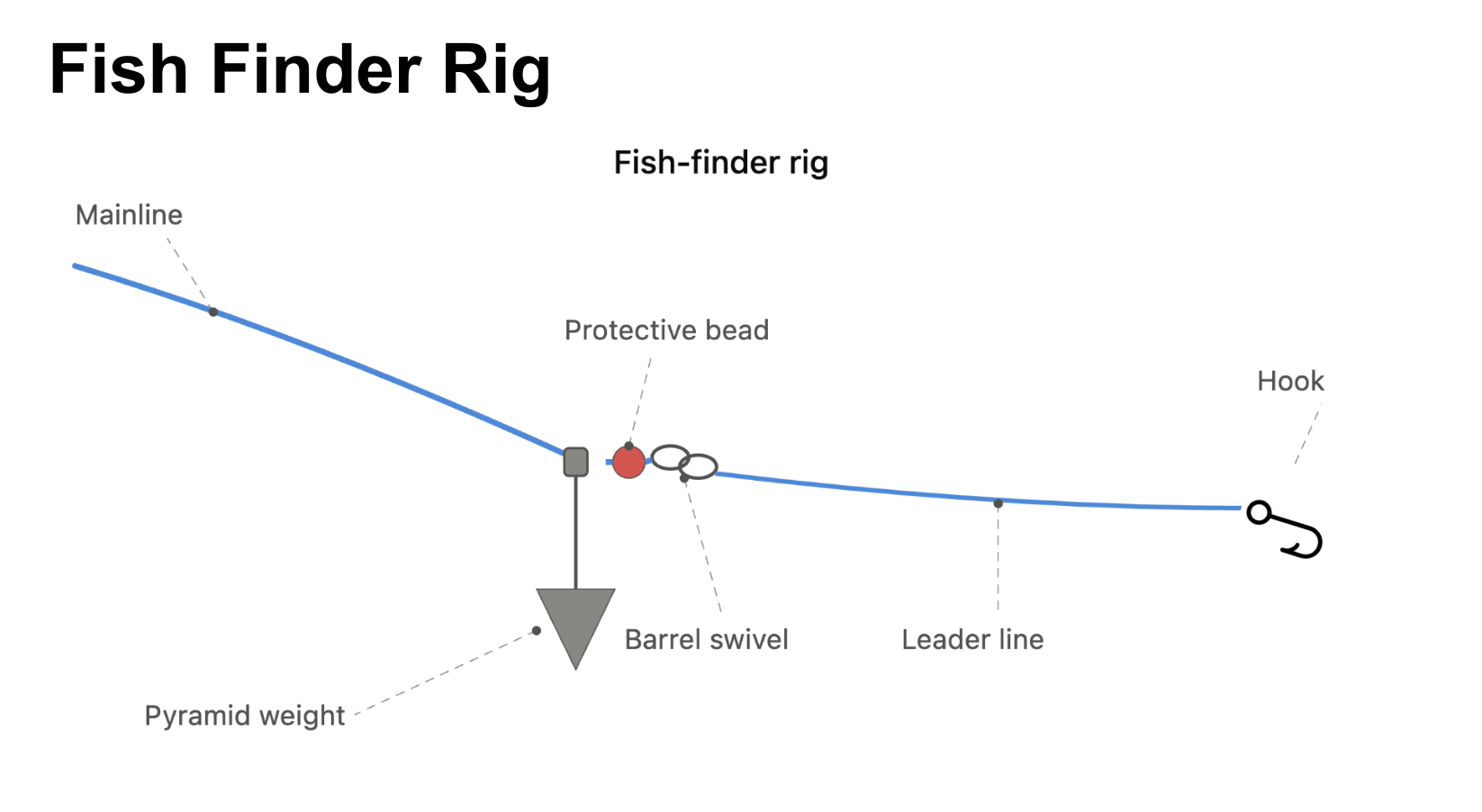
The two rigs worth knowing as a beginner are the fish-finder and the high-low. The fish-finder uses a sliding weight, leader, and hook — the bait sits on the bottom while a fish can pick it up and move without immediately feeling the resistance of the sinker. It's particularly useful with clam and bunker and works well when targeting larger fish.
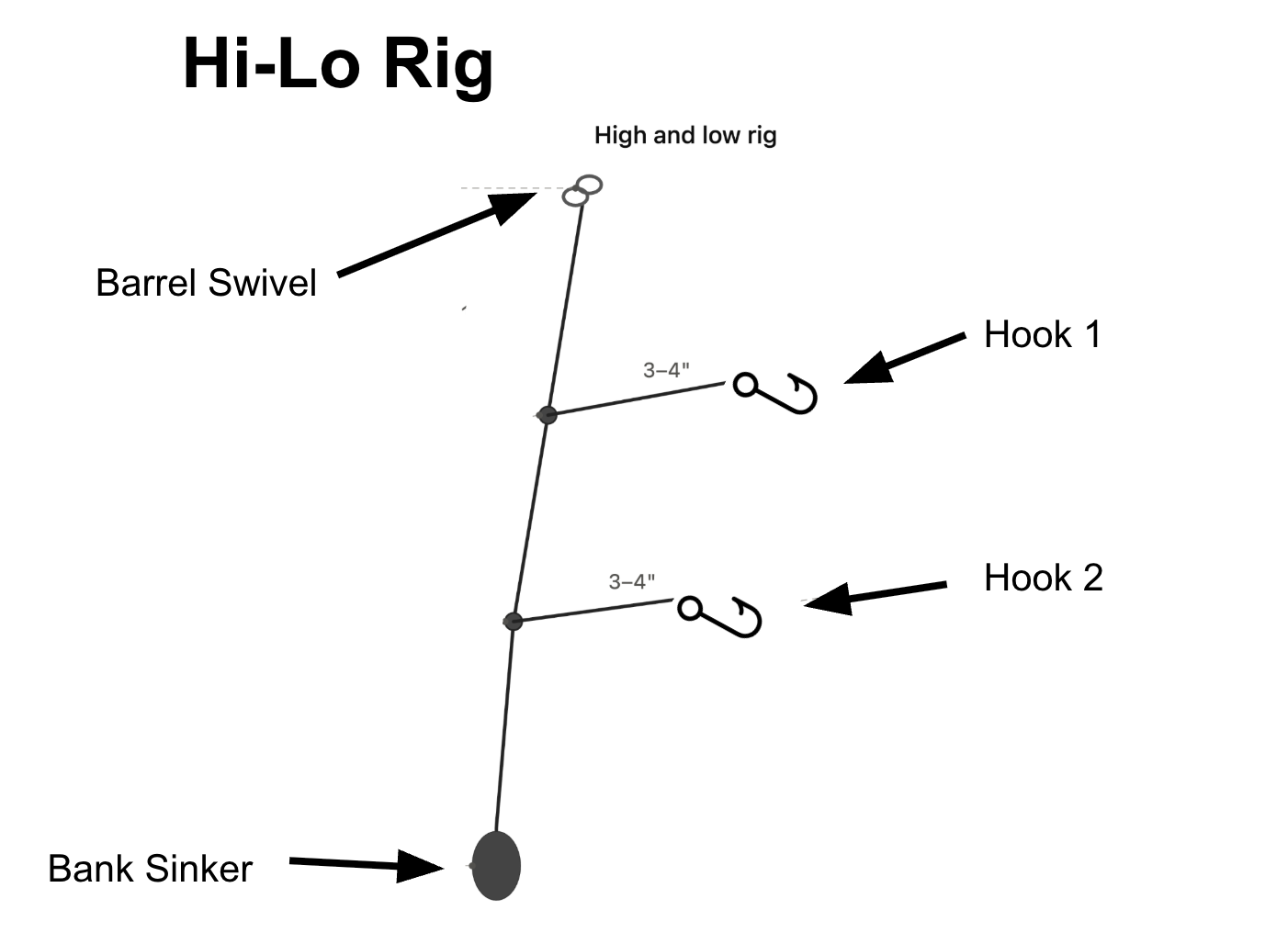
The high-low rig uses two hooks positioned at different heights above the bottom and is extremely versatile with baits like clam, bloodworms, and Fish Bites. For kingfish specifically, a high-low rig with small hooks, Fish Bites, and a pyramid sinker is a simple and effective setup that's hard to beat.
Lure fishing - What you need to know
Lure fishing is a little different. Instead of waiting for a fish to find your bait, you're actively searching for fish—your lure imitates something the fish already wants to eat, and you cover water until you get a bite. This is especially useful for roaming predators like striped bass and bluefish.
You don’t need dozens of different lures or sizes to get started. A good starting point is making sure you have options that cover the top, middle, and bottom of the water column. Five categories will cover most situations in New Jersey: a bucktail is probably the most versatile lure in the bag and can be fished through the middle or bounced along the bottom with a soft-plastic trailer; a paddle tail is great for covering water and imitating a variety of baitfish; a minnow plug excels in shallow water and troughs particularly during low light or after dark; a topwater pencil popper is one of the most exciting ways to fish when striped bass or bluefish are feeding on the surface; and a diamond jig is extremely versatile when you need maximum casting distance or are matching smaller slender bait like sand eels and spearing. We won't go into detail on how to fish each of the artificial lures listed above because plenty of great YouTube videos can teach you how to use any lure you're interested in.
Rod and reel - What you need to know
There are three basic setups worth thinking about:
- A light setup around a 7-foot medium rod with a 3,000-size reel is great for summer fishing targeting fluke, kingfish, bluefish, and schoolie bass.
- A general-purpose setup around a 9-foot rod with a 4,000–5,000-size reel and a lure rating around 1–4 oz is a great all-around option for plugging and lighter bait fishing.
- A heavy bait setup around a 10–12-foot medium-heavy rod with a 5,000–6,000-size reel and a rating around 3–8 oz for when you're throwing heavier bait and sinkers in rougher surf.
If you have no idea where to start, lean toward the 9-foot medium-heavy 1–4 oz setup — it gives you enough versatility to fish bait or lures without breaking the bank
Line - What you need to know
Braid is the standard main line for most surf fishing. It casts well, has little stretch, and makes it easier to feel what's happening at the end of your line. Roughly 20–40 lb braid depending on the setup is a good starting point, paired with a monofilament or fluorocarbon leader
Where to Fish in New Jersey
The ocean is huge, and fish aren't evenly dispersed. They're looking for food, structure, and favorable current, so if you can figure out where those three things come together, your odds of catching go way up.
New Jersey gives shore anglers plenty of options. You can fish miles of open sandy beaches, work the moving water around an inlet, or cast from rocky jetties. Each type of structure fishes differently and can attract different species. The good news is that once you know what you're looking for, you can find productive fishing all along the Jersey Shore. Let's start with the most common: the beach.
Sandy Beaches
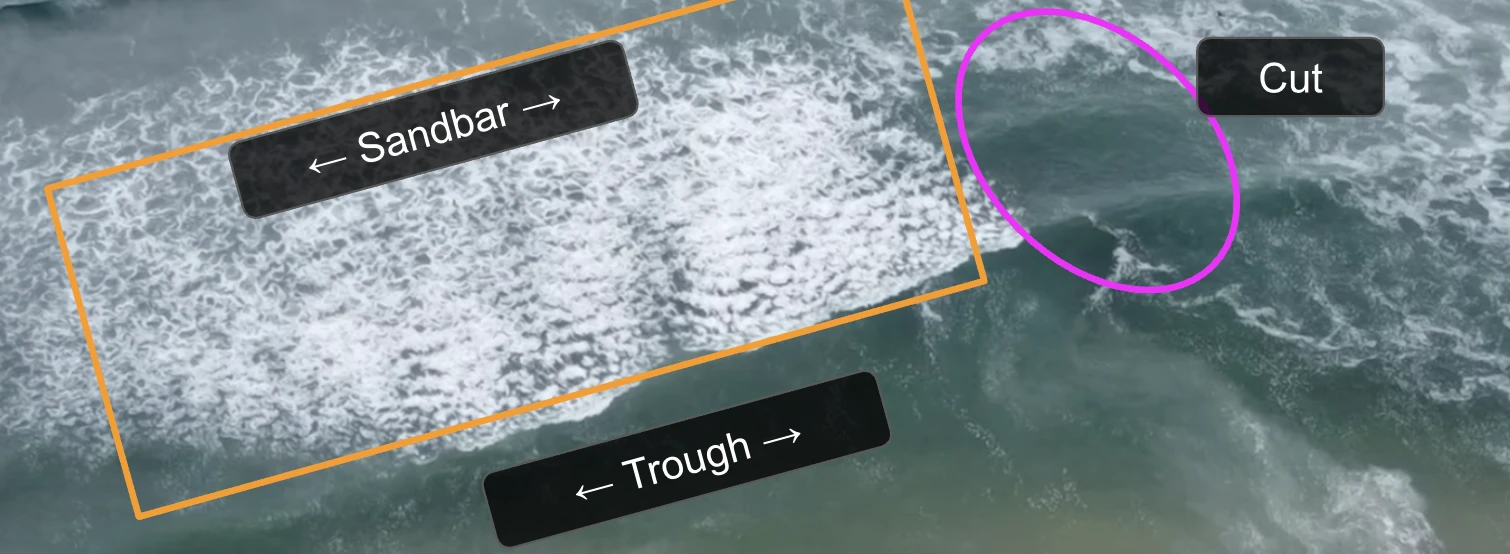
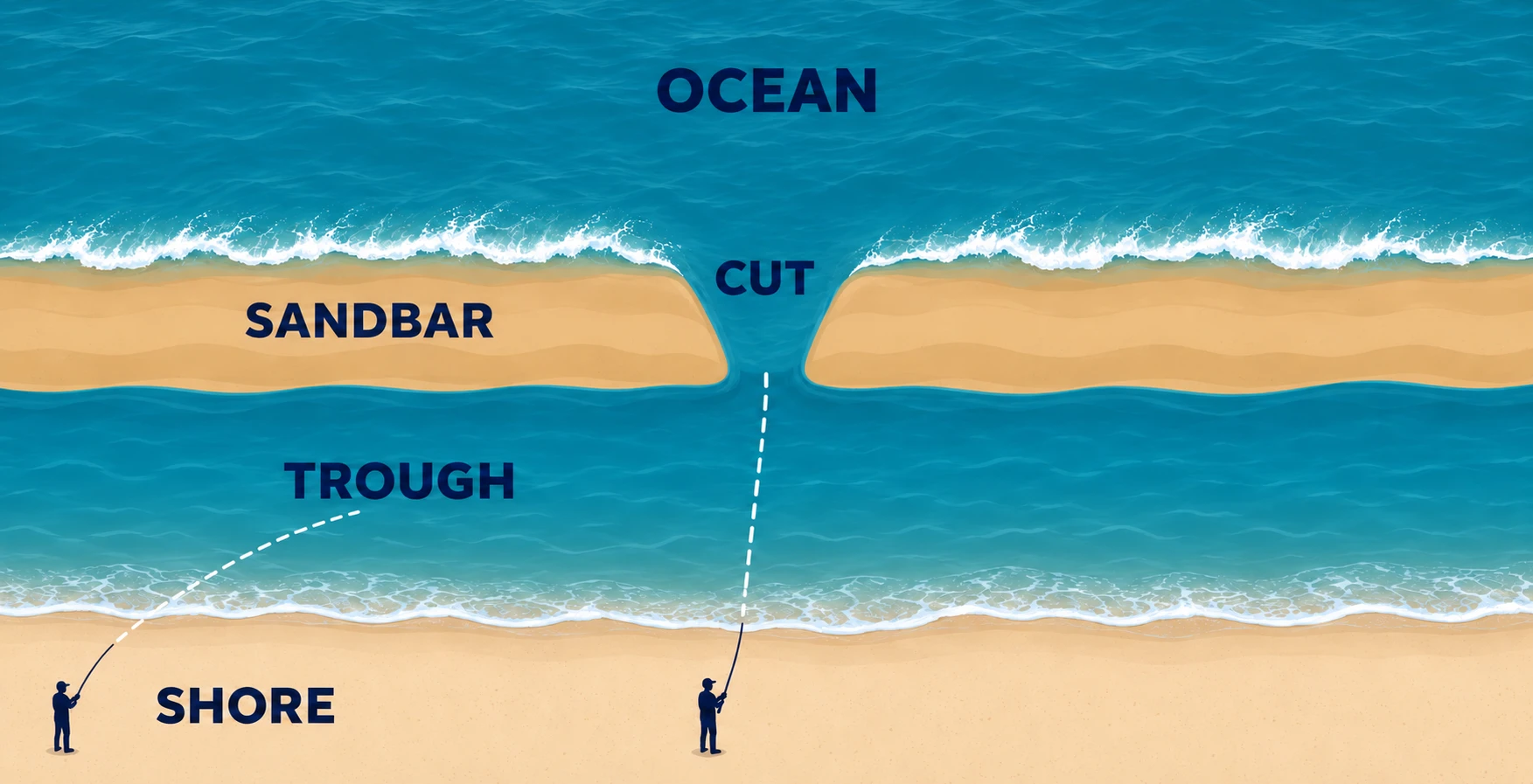
80% of the fish are hanging out in 20% of the water. And with hundreds of miles of coastline, how do you figure out where to set up and cast? The answer is learning how to “read the beach.” For example, the waves will give you a map of what's happening underneath the water, which will help you identify structures such as Sandbars, Troughs, Cuts, and more. See the table below for quick explanations:
| Feature | What it is & how to identify it | Why this structure matters |
|---|---|---|
| Sandbar | A raised ridge of sand running roughly parallel to the beach. Waves break over the shallowest part, creating a line of breaking waves. Look for waves consistently breaking farther offshore. | Don't necessarily fish the bar itself. The bar creates the deeper water around it where fish travel and feed. It can be especially useful for identifying the troughs and cuts where fish may be feeding. |
| Trough | The deeper channel between the beach and a sandbar, or between two sandbars. Look for darker, calmer water between lines of breaking waves. The first trough can be surprisingly close to shore. | Troughs give baitfish a deeper path to move along the beach, while predators can cruise through looking for an easy meal. |
| Cut | A break or gap in a sandbar where water can flow between the ocean and the trough. Look for a section where waves stop breaking or break noticeably less than they do on either side. | This is a prime feeding area. Cuts concentrate current and funnel bait through a narrow opening, creating an ambush point for predators. |
Some Tips:
- Baitfish move through these troughs and cuts, and predatory fish follow them. The fish don't need to sit directly in the deepest water. They often sit along the edges of the trough or near the cut and wait for bait to come through.
- Find the fish highway: Where a cut and trough meet.
- If you're having trouble reading the waves, you can always scout the beach at low tide: Low tide exposes more of the bottom and makes it much easier to see the sandbars, troughs, cuts, holes, and other structure that would otherwise be hidden underwater. Take a walk during low tide and pay attention to how the beach is laid out. Then, when the tide comes back in, you'll already know where those features are.
- Note: Don't assume the beach will look the same next month. The beach is constantly changing. Sand moves, troughs fill in, new cuts form, and productive areas can become unproductive. Check spots multiple times throughout the season for this reason.
Inlets
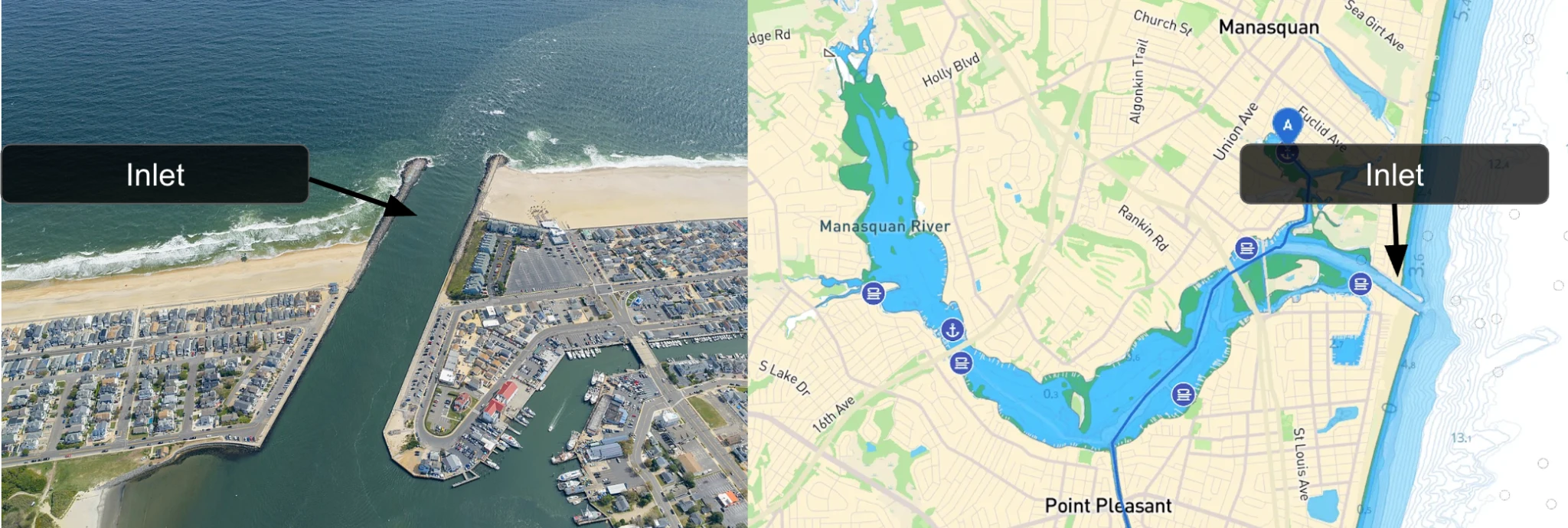
Similar to troughs, Inlets are natural highways for water, bait, and fish. They connect the back bays to the ocean and create moving water that fish can use to feed. Depending on the season and species you're targeting, inlets can be especially productive areas to explore.
Fluke, for example, move into the back bays in the spring as the water warms and bait becomes available. They also use inlets and nearby ocean waters during the warmer months, then generally move offshore in the fall. Striped bass and bluefish are equally important inlet species — particularly during the fall migration when they aggressively chase bunker through the inlet mouth. Weakfish (also called sea trout) are another species worth targeting, especially in the calmer back bay waters connected to the inlet.
Manasquan Inlet, between Manasquan and Point Pleasant Beach, is one of the most well-known surf fishing inlets in New Jersey and a great place to start. It offers shore access on both sides, consistent current, and sees a wide variety of species throughout the season — making it an ideal spot for beginners to experience inlet fishing firsthand
Jetties
Jetties are man-made rock structures usually built on either side of an inlet to prevent sand from filling in the channel and to protect boats moving in and out of the harbor.
Jetties are essentially their own ecosystem: rocks collect algae and mussels, mussels and algae attract small crabs, worms, and baitfish, and baitfish attract larger predators. On top of that, the current moving around the rocks creates eddies and seams where fish can sit and ambush bait without fighting the current. One of the biggest reasons anglers may choose a jetty over the open surf comes down to what they're trying to catch. Structure-oriented species like tautog (also called blackfish) are almost always better targeted from a jetty because the rocks are their natural habitat.
What Species to Fish for in New Jersey
| Fish Species | Where to Fish | Bait or Lure? | Time of Year |
|---|---|---|---|
| Striped Bass | Surf/Sandy Beaches — Patrol troughs and cuts, especially during spring and fall migrations when chasing baitfish close to shore. | Most common: Lures. Match the hatch: larger swimmers, swim shads, bucktails | Spring and fall, especially the fall migration. |
| Bluefish | Surf/Sandy Beaches — Chase schools of baitfish through the surf and often feed aggressively near the surface. | Most common: Lures. Fast-moving lures and topwater plugs are effective when bluefish chase bait. | Spring through fall; they can appear throughout much of the season. |
| Fluke | Surf/Sandy Beaches or near jetties — Lie on sandy bottoms and ambush prey. | Most Common: Lures. Bucktails and soft plastics fished near the bottom are popular. | Summer, particularly July and August for surf fishing. |
| Kingfish | Surf/Sandy Beaches — Feed on worms and small crustaceans in shallow sandy water | Most common: Bait. Fish Bites, clam, sand fleas, and bloodworms on a high-low rig. | Spring through fall. |
| Weakfish | Inlets and back-bay habitats. | Most common: Lures. Soft plastics and small baitfish imitations are popular. Shrimp and other natural baits can also work. | Seasonal opportunities depend on conditions. |
| Black Drum | Surf/Sandy Beaches — A key spring surf-fishing target. | Most common: Bait. Clams and other natural baits. | Spring. |
| Tautog (Blackfish) | Jetties — Hold close to rocks and other hard structure, where they forage for crabs and other small invertebrates. | Most common: Bait. Asian shore crabs, fiddler crabs, and green crabs are popular baits. | Spring and fall, with fall often a particularly popular season. |
| False Albacore | Surf/Sandy Beaches — Look for bait activity and feeding fish; cover water to find them. | Most common: Lures. Small metal or epoxy jigs and slender baitfish imitations work well. Retrieve quickly when fish are feeding. | Fall. |
| Sharks (including dogfish), Rays, and Skates | Surf/Sandy Beaches — Common encounters when bait fishing in the surf. | Most common: Bait. | Varies by species and season. |
Some shark species cannot be targeted or landed. Identify your catch and check current state and federal shark rules before targeting sharks; release prohibited species in the water.
When Is the Best Time to Surf Fish in New Jersey?
You can have the right rod, the right lure, and the perfect-looking beach and still have a terrible day. Conditions matter. The best day to fish isn't necessarily the day with the nicest weather. You're trying to find the combination of conditions that puts fish in a position where they want to feed. And in New Jersey, those conditions can look very different depending on the season and the species you're targeting.
Sunlight and Time of Day
Sunrise and sunset are useful starting points when planning a surf-fishing trip. These periods can provide productive feeding opportunities, and lower light can make fish more comfortable moving into shallower water. That said, you can of course also catch fish in the middle of the day or night. For example, in spring, night fishing can be particularly productive for striped bass. Sunrise and sunset are a good rule of thumb, but they're only part of the equation
Tides
Tides create water movement, move bait, and change how fish use structure. As water moves across sandbars, through cuts, and around jetties, it can carry baitfish and other food into areas where predators are waiting, which can create productive fishing windows. A rising or outgoing tide isn't necessarily better than the other; different species and techniques can favor different parts of the tide. For summer surf fishing in New Jersey, a useful starting point is to fish the two hours before and two hours after high tide. This window can be productive for species such as kingfish and fluke, although fluke can bite throughout the tide cycle when you find the right location. Other species have their own preferences. Tautog, for example, are often targeted around rocky structure during the day, with slower water movement near high tide potentially making it easier to present bait.
Wind
Wind is one of the most important variables to understand when surf fishing. It affects casting, line control, wave conditions, water temperature, and how easily you can spot baitfish. A little wind isn't necessarily a bad thing. But when the winds are heavy, fishing can get difficult: the surf becomes too rough and it's harder to cast, keep bait in place, feel subtle bites, and identify what's happening in the water.
On many ocean-facing New Jersey beaches, anglers say “west is best,” particularly during the fall striped bass run. A west or northwest wind often makes the surf easier to fish, while a moderate northeast wind can also produce good conditions. North and south winds can create crosswinds that make it harder to keep your line where you want it. No direction guarantees a bite: the effect depends on the beach's orientation, wind strength, surf, water clarity, and whether baitfish are present.
Water Temperature
Water temperature is especially important when you're thinking about seasonal fish movements. Instead of looking for one magic number, compare the water temperature with the past few days and with nearby beaches. In spring, steadily warming water, especially in shallow bays that warm sooner than the open ocean, can signal improving opportunities as fish move inshore. In fall, ocean water cooling through the 60s into the 50s °F is a useful cue to watch for the striped bass run, though bait and local conditions still matter. In summer, several days of south or southwest wind can bring colder water to the beach through upwelling, even when the air feels hot. Use these changes as clues about where fish and bait may be, rather than treating any temperature as a guarantee.
Barometric Pressure
Pressure is another variable worth watching, particularly when you're trying to understand why one day fishes differently from another. The key is to look for a pressure trend rather than a magic number. A falling pressure trend ahead of a weather front can be a great window to fish, assuming the surf is still fishable. It doesn’t guarantee a bite, but we often see good activity. Make sure to check what’s happening with the wind, waves, tide, water clarity, and bait before deciding to go.
Moon Phase
The moon affects tidal patterns, so it is worth checking when planning a trip. New and full moons generally produce larger tidal ranges. More pronounced tidal movement can create opportunities for bait and predators to move around. There's even a whole theory dedicated to how the sun and moon influence fish activity, called solunar theory. You can learn more about it HERE.
Water Clarity
Water clarity affects how easily fish can see your bait or lure. After strong wind or heavy surf, stirred-up sand can turn the water brown, and weed can foul your line. Slightly stained water can still fish well, especially when baitfish are present. In clearer water, start with natural-looking lure colors. In murkier water, try a higher-contrast lure and slow your retrieve so fish have more time to find it, or use scent-producing bait such as clam or bunker. If the surf is extremely muddy or full of weed, look for a cleaner pocket or an edge where clearer and dirtier water meet instead of making the same cast over and over.
Putting It All Together
You don't need perfect conditions before every trip. Use this quick checklist to choose a spot and a fishing window:
- Target: Which species are likely to be around this season?
- Spot: Where are the troughs, cuts, inlets, or jetties, and is there bait or feeding activity?
- Timing: How will the tide and time of day affect that spot?
- Fishability: Will the wind, surf, and water clarity let you present bait or lures effectively?
- Trends: Is the water warming or cooling? Is a weather front approaching? Use pressure and moon phase as supporting clues.
If you want an easy way to check all these variables at once, FishNotify does the forecast math for your chosen spot: it brings tides, wind, surf, water temperature, and pressure together on one page and calculates a fishing score. Use the forecast below to find a promising window, then confirm bait, structure, and clarity when you arrive.
Check Your New Jersey Fishing Forecast
Search the beach or inlet you're planning to fish. Compare the next seven days and choose a promising window that fits your schedule. No forecast can guarantee a catch, so use what you observe at the water to adjust.