
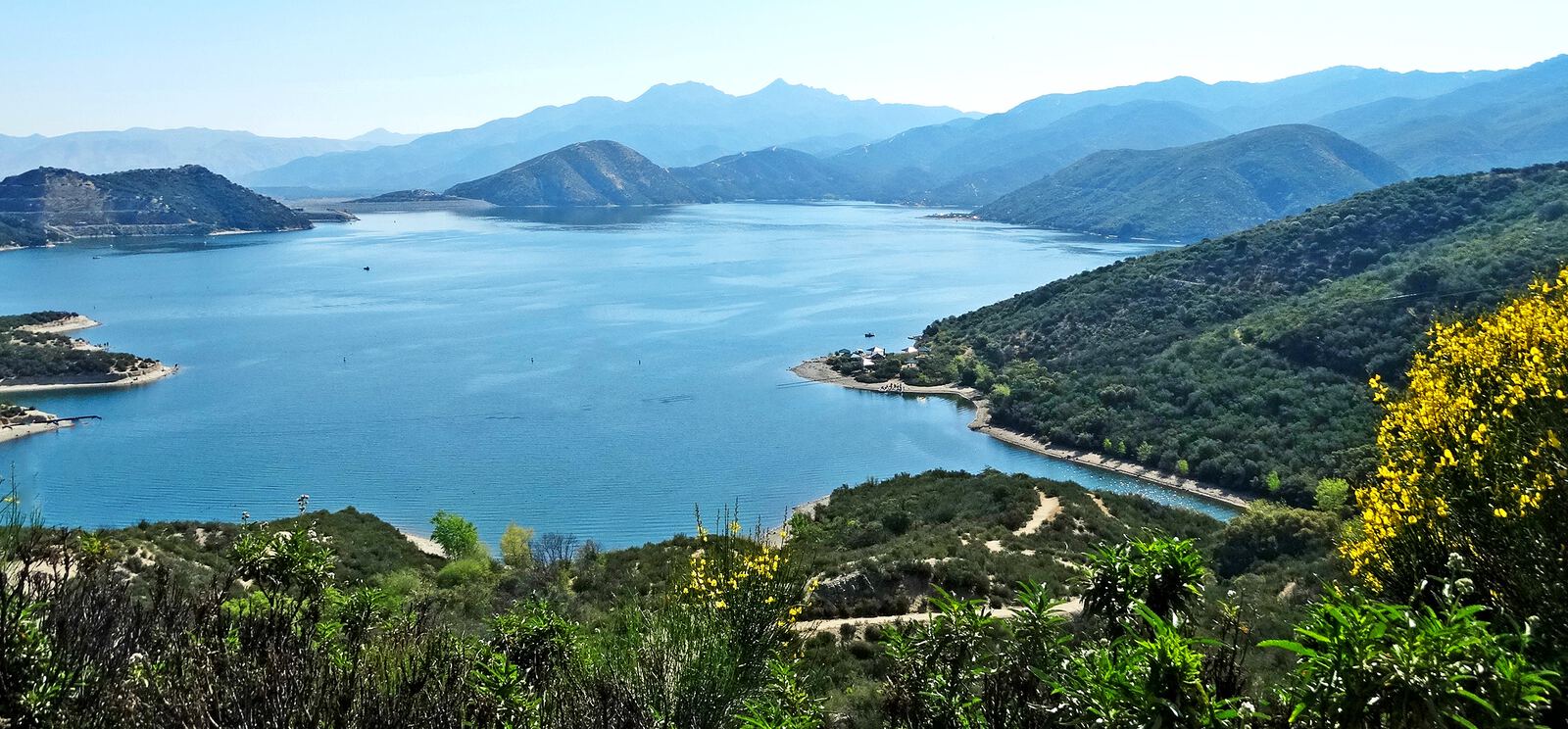

Planning a fishing trip to Silverwood Lake
Silverwood Lake sits in the San Bernardino Mountains near Hesperia, within Silverwood Lake State Recreation Area. Anglers come here for largemouth bass, striped bass, trout, catfish, bluegill and crappie, with different ways to approach the fishing as seasons and conditions change.
This guide brings together access points, parking details, seasonal advice and fishing setups to help you prepare. Use the suggested areas and techniques as starting points, then explore and find your own favorite places to fish.
Fishing access around Silverwood Lake
Below are a few places to start exploring Silverwood’s shoreline—not a complete list of access points or fishing spots. The map and parking details can help you plan a visit, while leaving plenty of room to explore other areas where public access and fishing are permitted.
- Chamise picnic shorelineWalk in via the PCT from Cleghorn day use.
- Cleghorn shore trailLots 4–5. Stay outside the swim area when fishing.
- Southern-shore trailStarts at the far end of lot 3; 0.44 miles each way.
- Miller Canyon armClosed October–March.
- Marina areaVista Point #1 fishing access is listed near the entrance; confirm access during the dock closure.
Cleghorn: nearby shore access
Cleghorn offers a shorter walk to the water and several fishing options. Try cut bait for stripers or catfish, or a swimbait for stripers if you prefer casting. Trout have also been caught here on jigs during the cool season; check recent stocking before making trout your main target.
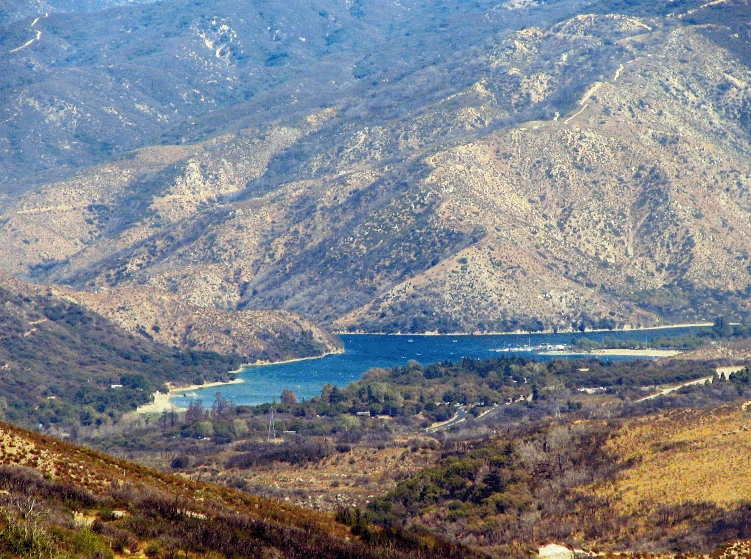

Getting there: Open Cleghorn day-use parking in Google Maps, then follow park signs for lots 4 and 5. You can reach Cleghorn’s shoreline here without the longer hike to Chamise.
Lots 4 and 5 serve the 0.33-mile paved Cleghorn trail, with accessible parking and restrooms. The trail runs beside the swim beach: keep fishing outside the designated swimming boundary and use established access to the bank. The beach pathway reaches the high-water line, so low water can leave an unpaved stretch. Cleghorn facilities and access
Before unloading, locate the swim boundary and an open bank you can safely reach.
Marina area and Vista Point 1
Map marker 5 shows the marina area. Open the marina location in Google Maps for orientation; this is not a parking pin or the exact fishing position.
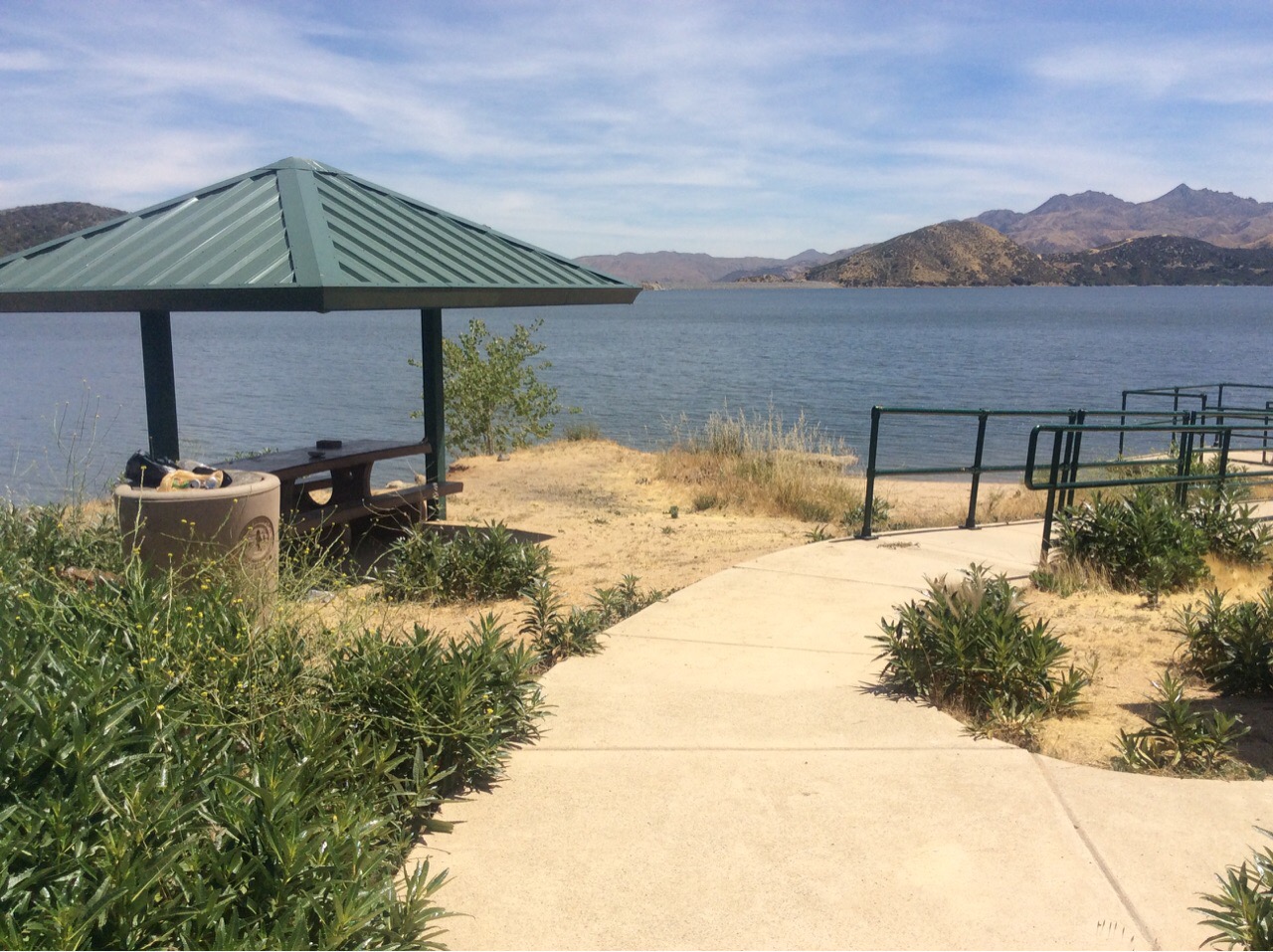
Vista Point 1 at the marina entry has a concrete area and picnic table. State Parks lists potentially usable fishing access here.
Call the park at 760-389-2281 to confirm it is open during the dock closure. If you need firm-surface access, ask about the whole route to the fishing position. Launch ramps and courtesy docks are off limits for fishing.
Chamise Cove: combine fishing with a longer hike
Chamise is a separate shoreline destination reached by a longer hike from the same Cleghorn day-use area. Drive to PCTA’s Cleghorn parking pin, then follow the described Pacific Crest Trail route on foot.
About two miles into the walk, a side trail descends to Chamise Boat-In Picnic Area, with tables and a restroom. Allow additional distance for that descent and your shoreline position. PCTA’s full outing is 4.9 miles with 794 feet of elevation gain; that is the full itinerary, not an exact distance to the picnic area.
Explore the accessible shoreline and choose a spot around the water level, cover and posted boundaries. Chamise has also been recommended as a good area to try for largemouth bass and channel catfish. Pack lightly, check trail closures and allow time for the uphill return.
Southern shore: a separate walk from lot 3
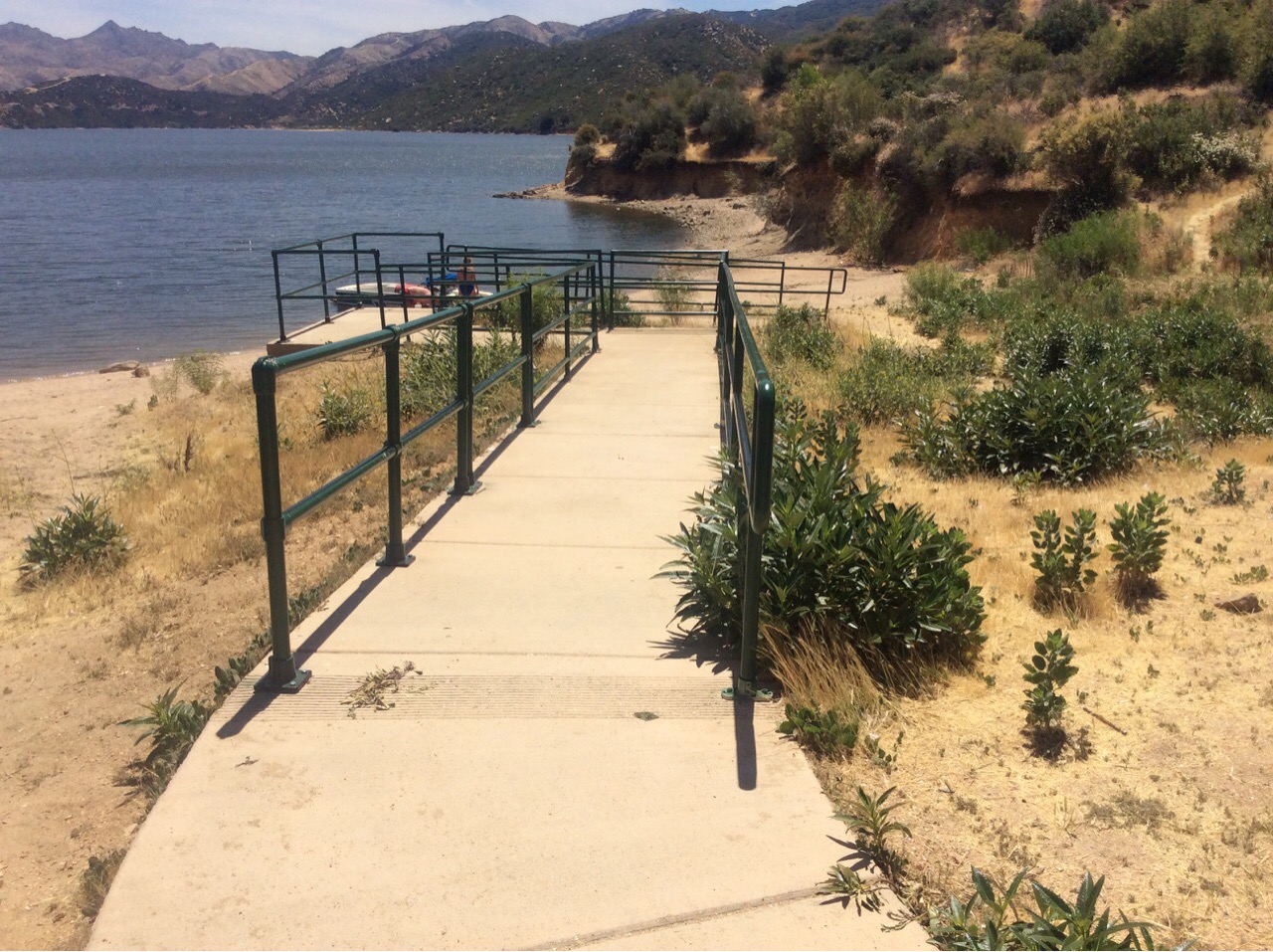
The southern-shore multi-use trail from lot 3 is 0.44 miles each way. It is paved, with some steeper sections; restrooms are at Marina Day Use. It is a shoreline exploration option, not a designated fishing platform. Trail details
Access limits that matter
- No fishing in designated swimming areas, from launch ramps or courtesy docks, or from vessels inside the designated marina area.
- Miller Canyon is listed as closed October–March in the park’s posted-order summary. Choose another arrival area for a fall or winter trip.
- The Sawpit Boat Lot requires proof of boat-fee payment when posted; use permitted day-use parking.
See the park’s posted orders for these restrictions. Exact swim boundaries and temporary closures are marked on site.
Fishing Silverwood from shore
Start by looking for a change in the shoreline: a rocky point extending into the water, the edge of submerged brush, or a cove that drops into deeper water. Silverwood bass catch accounts repeatedly feature rock and points. From the bank, use those features to narrow your casts rather than trying to reach the middle of the lake.
Rainbow trout: floating bait or a small spoon
Cooler weather and seasonal trout plants make trout a practical bank target. Bring a light spinning outfit, small spoons or spinners, and a simple floating-bait rig. Summer trout can be deeper than you can comfortably reach from shore.
For a simple trout outfit, a light spinning rod with 4–6-pound monofilament and small bait hooks is a starting option. Bring spare leader and check it for abrasion after fishing around rocks. This light outfit is for small trout presentations, not heavy sinkers or large striper swimbaits.
For floating bait, set up a Carolina-style rig. Thread the main line through a sliding egg sinker and a small smooth bead, then tie it to a swivel. Tie a separate leader from the other end of the swivel to a small bait hook. The bead cushions the swivel knot from the sliding sinker; the rig can work without one, but it is a useful addition. Start with roughly 18 inches of leader and adjust for the bottom you find.
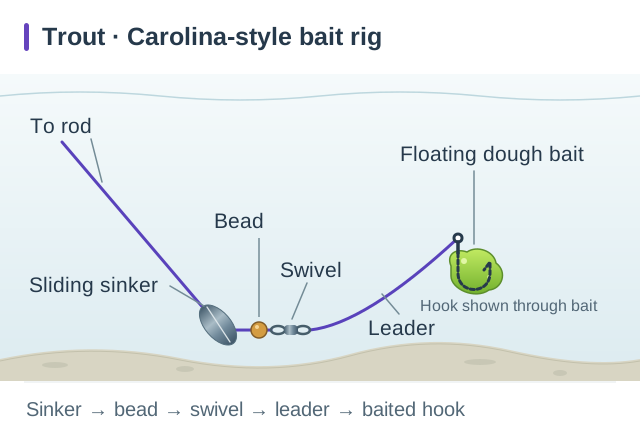
Mold floating trout dough bait (like PowerBait) around the hook. Use enough to lift the baited hook, and check it in shallow water before casting. The sinker rests on bottom while the bait rises above it. After casting, let the sinker settle and gently take up excess slack without dragging the rig. Try a garlic-scented variety. Leave the bait in the water for a while and watch your rod tip or line for bites.
For an active approach, try a small spoon on ultralight tackle. A ⅛-ounce (3.5-gram) spoon with a 4-pound leader is one setup used successfully from Silverwood’s shore. Start with a slow retrieve near bottom, then vary the sinking time and casting angle. Work the close-in water too; fish can be within a short cast.
If bites are scarce, try a different casting distance, depth or legal bank position. Leave other anglers room. After a plant, look beyond the release area as fish move out into the lake.
Largemouth bass: work reachable rock and cover
A drop-shot worm or compact Ned rig is one way to work reachable rock and cover. Choose a presentation you can retrieve through the cover in front of you; neither rig is a requirement for catching Silverwood bass.
For the illustrated drop-shot, tie the hook above a long tag end and attach the weight to that tag end. Pass the hook through just the nose of the plastic worm, leaving the point exposed and facing up. Start with a visible rock, cover edge or point: let the weight settle, pause the worm above it, and add small movements. Fish nearby targets before making your longest cast.
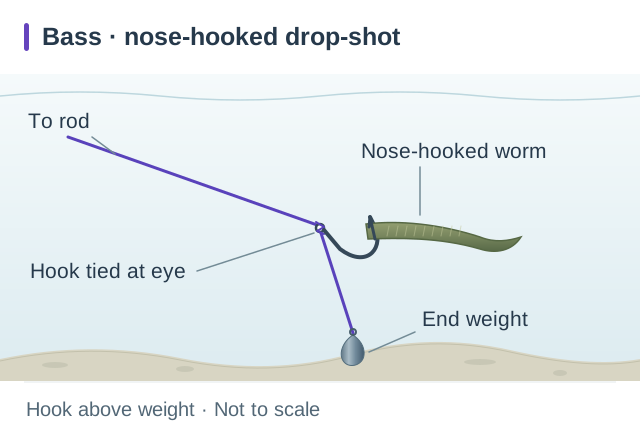
Before moving to another spot, try a few casts from a different angle around the same rocks or cover. Another option is a Ned rig: a small soft-plastic worm threaded onto a lightweight jig head, which combines the hook and weight. Let it sink to the bottom, then slowly drag it or give it small hops, pausing between movements. Try it where there are fewer weeds and rocks to snag the exposed hook. If you’re hiking to Chamise, pack light: a few soft plastics, spare hooks and weights will give you options without filling your bag.
Use moving baits when fish are chasing. Try topwaters or crankbaits in low light, explore shallow coves in spring, and slow down with plastics in cool water. Let visible baitfish and the cover you can reach help you choose, rather than cycling through lures at random.
Around brush, weeds or other cover that can snag an exposed hook, try a Texas-rigged worm. Thread the worm onto the hook so it sits straight, then tuck just the hook tip beneath the surface of the plastic. This helps prevent snags while allowing the hook to push through when a fish bites. In open water with little snag risk, you can leave the point exposed. Use enough weight to reach the bottom and keep control of the bait in the wind. Watch how to set up a Texas rig.
Striped bass: bait fishing or covering water
Prioritize low light—especially dawn and dusk—when planning a striper trip. Fish the early-morning or late-afternoon window available within park hours. These are good times to look for feeding fish, but stripers can also feed during daylight; follow the activity you find.
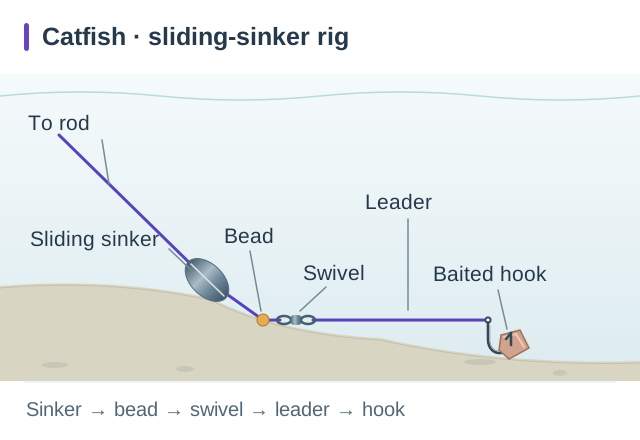
For bait fishing, try anchovies, sardines or nightcrawlers. A sliding-sinker rig lets you work one area patiently: thread the main line through the sinker and a smooth protective bead, tie it to a swivel, then add a separate leader and baited hook. Match the hook to the bait and leave its point clear. Use a rod rated for the combined bait and sinker weight. Unlike floating trout dough, cut bait usually stays near bottom.
For casting, watch for boils. These are bursts of surface splashes as feeding stripers drive baitfish toward the surface. Cast a baitfish-shaped swimbait or crankbait beyond the activity and retrieve through its edge. Match the size of the baitfish you can see. If the surface is quiet, try different retrieve depths around reachable points; fish may still be feeding below.
The illustrated jig-head paddle-tail is one casting option. Thread the plastic straight onto the hook, with the point exiting its back, and tie the line to the jig-head eye. The head supplies the weight for this setup. Vary the sinking time and retrieve speed to explore different depths.
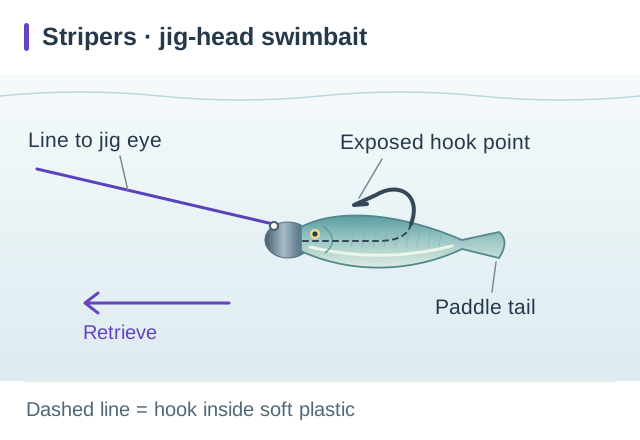
Try larger trout-pattern lures around trout plants. The cooler-season stocking period, particularly the days after a confirmed plant, can bring opportunities as larger stripers hunt stocked trout closer to shore. Fall is also worth considering for stripers, but check actual stocking updates rather than assuming a plant has occurred. Use a rod, reel and line suited to the larger lure, and stay within the rod’s casting-weight rating.
Cleghorn is one starting area, not the only option. Explore permitted shoreline with reachable points or feeding activity. When action fades, change your casting angle, depth or location. Keep casts clear of restricted launch and dock areas, and allow time to return before the park closes.
Channel catfish: cut bait near bottom
Try cut bait for channel catfish around accessible cove bottoms and rocky edges. Cleghorn and Chamise are starting options, not the only places to try. Plan an evening session around the park’s closing time.
For catfish, try a sliding-sinker rig: run the main line through the sinker and a bead, then tie it to a barrel swivel. Add a separate leader and a hook baited with cut bait, leaving the point clear. Let the sinker settle, then take up excess slack without dragging the bait. Use enough weight to hold near bottom without exceeding your rod’s casting rating.
Bluegill: small baits near cover
Look for reachable rock, submerged brush or vegetation, and offer a small piece of worm, a mealworm or a cricket. Keep the bait small enough for bluegill to take. Bluegill tackle and habitat guidance helps you choose a simple setup without needing a long cast.
For bluegill, try a small baited hook under a fixed bobber. Clip the bobber onto the line at your chosen depth, then add light split shot below it and above the hook to help the bait sink. Use only enough shot for the bobber to support the rig without being pulled under, and adjust the bobber position to keep the bait above bottom.
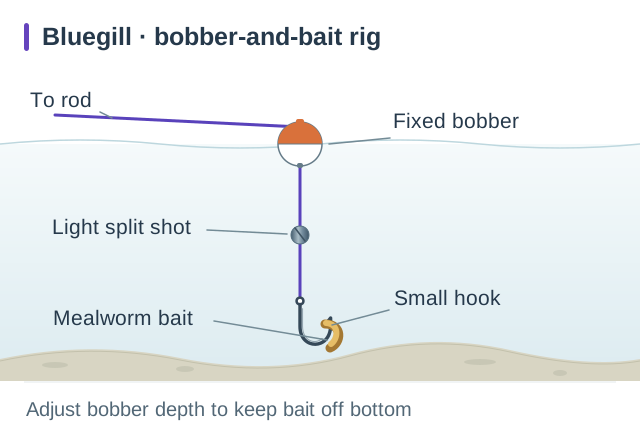
For a family outing, prioritize easy footing, room to handle hooks and a short return walk over reaching another cove.
Crappie: find the school, then work that depth
Crappie are among Silverwood’s confirmed species. They’re an option to explore, though catches can be inconsistent. Try cove edges and nearby drop-offs, with shallower water worth exploring in spring.
Pack a few small crappie jigs. Crappie gather around cover in schools, so finding fish matters more than repeatedly casting to an empty stretch. Work a jig slowly near reachable cover, varying its depth. After a bite, repeat the depth and casting line before moving; if an area stays quiet, explore another piece of cover.
Carp: another species in the lake
The park lists carp among Silverwood’s fish. The examples above cover the other species; they are not a complete list of fishing opportunities here.
Getting bites but losing fish?
If fish keep striking but coming off, check your tackle before moving. Inspect the hook point and shape, check knots and line for damage, and replace damaged hooks. Make checking for bent hooks part of the routine when trout keep coming off.
Boat and kayak options
When launching reopens, these locally documented approaches offer a few options beyond the bank:
- Bass: a Texas-rigged worm around structure.
- Trout: a 1/16-ounce tube jig, worked slowly just above bottom.
- Stripers: small minnow-style plastics on light jig heads around schools you locate.
Check launch restrictions and the wind forecast before bringing a watercraft, and plan a manageable return to the launch.
What changes through the year?
| Season | A practical Silverwood plan |
|---|---|
| Winter | Check for trout plants and pack light tackle. For bass, slow down around reachable rock. Leave Miller Canyon out of your arrival plan during its seasonal closure. |
| Spring | Consider trout, bass in shallow coves, or a search for crappie near cover. Check the water you find; seasonal creek inflows may be absent in a dry year. |
| Summer | Consider bass, catfish or bluegill near cover rather than assuming trout remain within easy casting range. Choose a shorter walk when heat or wind would make the Chamise return uncomfortable. |
| Fall | Watch for baitfish and work reachable points for bass or stripers; plan to search rather than expect fish at one cove. Revisit trout when stocking resumes. Miller Canyon’s seasonal closure starts in October. |
An early visit within park hours can offer more manageable conditions before afternoon winds build, but check the day’s forecast rather than assuming every morning will be calm. Pick a bank where you can cast and return safely; if wind makes line control difficult, shorten the cast or move to a more sheltered accessible position. Check the forecast for your planned hours, and choose a route you can comfortably retrace if conditions worsen.
Check trout stocking before a trout trip
California’s Department of Water Resources supplies Silverwood’s seasonal rainbow trout plants. Follow the park’s stocking information to DWR’s recreation updates.
Check the release date and distinguish a scheduled plant from a completed one. Use stocking to help choose when to visit, then choose your fishing position around legal access, water level and conditions.
Tackle and supplies
Pack spare hooks and weights, pliers, a landing net, drinking water, sun protection and a bag for discarded line. Wear footwear suited to loose rock and uneven ground; paved day-use paths do not mean a paved route to the water. For Chamise, keep everything manageable for the return climb.
For a nearby bait stop, check Silverwood Country Store at 12077 State Highway 138. Call 760-389-2423 to confirm hours and the bait you need before stopping.
Buy essentials before arriving rather than relying on marina services during the closure.
Hours, fees and fishing rules
Park hours are 7 a.m.–7 p.m. October–March and 6 a.m.–9 p.m. April–September. Standard vehicle day use is $10, or $20 on summer weekends and holidays from Memorial Day weekend through Labor Day weekend. Check hours, fees and restrictions for your visit.
Anglers aged 16 and older generally need a California sport fishing license. Check current freshwater regulations for species limits and tackle rules. Before keeping fish to eat, read the Silverwood fish-consumption advisory.