
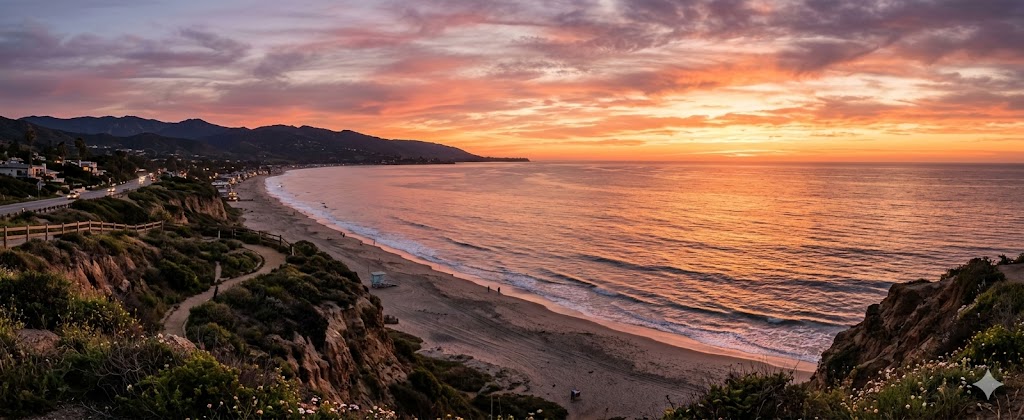
From Santa Barbara to San Diego, Southern California has no shortage of great surf fishing action. Despite the great opportunity, surf fishing remains a niche sport and is not nearly as popular as it is in states like Texas or Florida. The core problem is that few people know how to fish the SoCal coastline, and those who do don't share their knowledge online, making it extremely difficult for beginners to find helpful information. This guide aims to fix that and breaks down everything you need to get started, from local regulations and gear setups to baits, species, locations, timing, and proven shore-fishing techniques. Let's get right into it.
The Basics
What fish can I catch from shore in Southern California?
The region is home to a diverse range of fish species, from surfperch and corbina to halibut and rockfish, as well as the occasional white sea bass. Ultimately, what you catch will depend on when, where, and how you fish — more on this in the coming sections.
What are the best months to surf fish in Southern California?
Thanks to the relatively mild weather in Southern California, you can catch most species year-round. But to be clear, some months are still better than others when targeting specific species. You can use the table below as a general reference point:
| Species | Best Times to Catch from Shore |
|---|---|
| California Halibut | January – May |
| Spotted Bay Bass | March – October |
| California Sheephead | March – September |
| Leopard Shark | May – August |
| Croaker | May – August |
| Surf Perch | December – April |
| California Corbina | June – September |
| Calico Bass | June – September |
| Sand Bass | June – September |
| White Sea Bass | July – October |
| Rockfish | October – March |
| Cabezon | October – March |
Where can I fish from the shore in Southern California? What are the best beaches and piers?
There are hundreds of public beaches, piers, and jetties, and, so long as they aren't in Marine Protected Areas (MPAs), you can fish at any/all of them. That said, it's important to note that just because you can fish at ANY beach doesn't mean you can catch fish ANYWHERE on that beach. Fish hang around structure — hard stop. Sand is usually not considered a structure, and since a majority of the Southern California coastline is sand, finding fish can be difficult, especially if you're just blind casting into water at some random beach.
To help you better understand the pros and cons of the various types of structure and the different types of fish you can expect to find hanging around these habitats, please reference the breakdown below:
| Location / Structure | Description | Pros | Cons | Most Common Species |
|---|---|---|---|---|
| Surf – Troughs / Sand Bars | Sand bars = raised ridges of sand just offshore where waves tend to break. Troughs = deeper pools between sand bars. | Miles of open beach access · More space = less fishermen = less fishing pressure · Light gear | Very reliant on conditions (surf, tide, swell, wind) · Lots of walking · Susceptible to large crowds · Harder to "find the fish" · Requires more prep and planning | Corbina, Surfperch, Halibut |
| Surf – Rocks / Reefs | Areas of natural rock, boulders, or submerged reef that sit along the shoreline or just offshore. | Greater species variety · Larger fish · Consistent fishing year-round | Very reliant on conditions (surf, tide, swell, wind) · Snag-heavy: lost rigs are part of the game · Heavy gear | Rockfish, Cabezon, Halibut |
| Surf – Kelp | Large underwater seaweed that grows from the ocean floor up toward the surface. These dense forests usually sit just offshore. | Greater species variety · Larger fish · Home to some of the tastiest and hardest fighting fish in SoCal | Very reliant on conditions (surf, tide, swell, wind) · Snag-heavy: lost rigs are part of the game · Difficult to reach from shore · Not beginner-friendly | Sheephead, Calico Bass, White Seabass, Halibut |
| Pier | Large wooden or concrete structures that extend into the ocean. | Extends into deeper water · Decent species variety · No fishing license required · The pier itself acts as structure · Little to no planning – just show up | Crowded · Heavy fishing pressure · Fixed position, less freedom to move | Mackerel, Bonito, Croaker, Sharks, Rays |
| Jetty / Breakwater | Rock or concrete barriers protecting harbors and beaches. | Jetty acts as great rocky structure · Often holds bait year-round · Access to shallow & deeper water | Safety risk (slippery rocks, waves) · Lots of snags (lures/bait get stuck between rocks) · Fewer access points · Lots of fishing pressure · Often a breeding ground, which means smaller fish | Sand Bass, Spotted Bay Bass, Sheephead, Sargo, Opaleye |
| Bay / Harbor | Sheltered waters with docks, boat slips, pilings, eelgrass beds, and man-made structures. | Protected from surf & swell – great training ground, especially for kids · Somewhat consistent year-round fishing · Great for kayaks & light tackle · Variety of structure (docks, pilings, eelgrass) | Heavier boat traffic · Water clarity problems · Water quality problems (seldom eat fish from bays/harbors) · Not beginner-friendly | Spotted Bay Bass, Barracuda, Sand Bass, Halibut, Croaker, Bat Rays, Leopard Sharks |
Surf – Troughs / Sand Bars
Sand bars = raised ridges of sand just offshore where waves tend to break. Troughs = deeper pools between sand bars.
- Miles of open beach access
- More space = less fishermen = less fishing pressure
- Light gear
- Very reliant on conditions (surf, tide, swell, wind)
- Lots of walking
- Susceptible to large crowds
- Harder to "find the fish"
- Requires more prep and planning
Surf – Rocks / Reefs
Areas of natural rock, boulders, or submerged reef that sit along the shoreline or just offshore.
- Greater species variety
- Larger fish
- Consistent fishing year-round
- Very reliant on conditions (surf, tide, swell, wind)
- Snag-heavy: lost rigs are part of the game
- Heavy gear
Surf – Kelp
Large underwater seaweed that grows from the ocean floor up toward the surface. These dense forests usually sit just offshore.
- Greater species variety
- Larger fish
- Home to some of the tastiest and hardest fighting fish in SoCal
- Very reliant on conditions (surf, tide, swell, wind)
- Snag-heavy: lost rigs are part of the game
- Difficult to reach from shore
- Not beginner-friendly
Pier
Large wooden or concrete structures that extend into the ocean.
- Extends into deeper water
- Decent species variety
- No fishing license required
- The pier itself acts as structure
- Little to no planning – just show up
- Crowded
- Heavy fishing pressure
- Fixed position, less freedom to move
Jetty / Breakwater
Rock or concrete barriers protecting harbors and beaches.
- Jetty acts as great rocky structure
- Often holds bait year-round
- Access to shallow & deeper water
- Safety risk (slippery rocks, waves)
- Lots of snags (lures/bait get stuck between rocks)
- Fewer access points
- Lots of fishing pressure
- Often a breeding ground, which means smaller fish
Bay / Harbor
Sheltered waters with docks, boat slips, pilings, eelgrass beds, and man-made structures.
- Protected from surf & swell – great training ground, especially for kids
- Somewhat consistent year-round fishing
- Great for kayaks & light tackle
- Variety of structure (docks, pilings, eelgrass)
- Heavier boat traffic
- Water clarity problems
- Water quality problems (seldom eat fish from bays/harbors)
- Not beginner-friendly
Both types of structure can hold fish and are fun, but because there's already ample information online about pier and jetty fishing, this guide focuses on the less accessible information — like how to catch a legal halibut from shore, i.e., how to catch the prized fish from the surf. Before diving into all things rocks, reefs, and kelp, let's quickly review California rules and regulations. If you're already familiar, skip ahead to Fishing Styles & Techniques.
Rules and Regulations
Who needs a California Fishing License? Where can I purchase one?
Anyone 16 years of age or older must purchase a California Fishing License. If you're new to fishing, we suggest you purchase the following:
- Annual Resident Sport Fishing — Might as well buy the year, instead of limiting yourself to the one-day or two-day
- Ocean Enhancement Validation — Required if you want to fish in the ocean (south of Santa Barbara)
- Optional: Second Rod Validation — You can only fish with one rod at a time in California, so if you want to fish more than one rod, you'll need to purchase this enhancement.
Is fishing allowed at all beaches in Southern California?
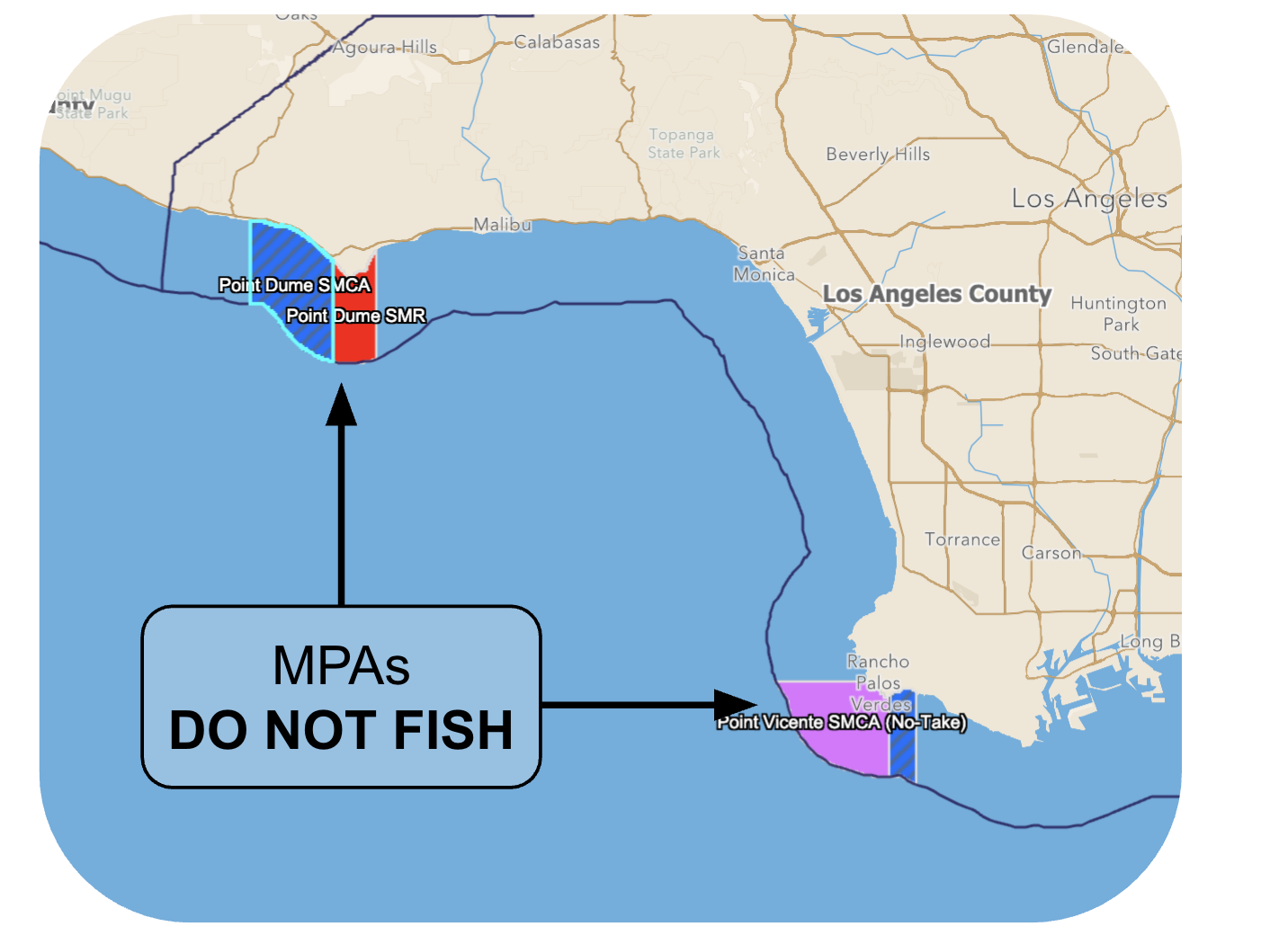
No. In California, fishing is prohibited within Marine Protected Areas (MPAs). MPAs restrict or prohibit fishing to protect local marine life. California has numerous MPAs, so it's important you know and review MPA maps before you head out. There are different types of MPAs in California, so as a general rule of thumb, just avoid any of the highlighted areas on California's MPA map. See example below:
Can I harvest the fish I catch? Which fish can I keep?
You can keep most nearshore species in California, but there are a few exceptions, such as the bright orange California Garibaldi or the Black Seabass. In addition, most species have a minimum size requirement, meaning you must release any fish measuring below California's stated size requirement. For example, California's size limit for Halibut has been 22 inches for the last few years, so if a fisherman catches a 21-inch Halibut, they must release it back into the ocean.
Most species also have an official bag limit, meaning you can only harvest a specific number of said fish per day. For example, if the daily bag limit for California Halibut is 2, you can only take/harvest 2 legal halibut per day. California Fish and Game officers are at most beaches and will review your catch, so please always measure your fish before harvesting to ensure it is legal. If the warden catches you with an undersized fish or too many fish, they will issue a hefty fine, so don't risk it.
Fishing Styles and Techniques
There are several fishing techniques and styles, but ultimately, all methods will fall into one of two buckets: Bait Fishing or Lure Fishing. Bait Fishing, sometimes referred to as "Bait and Wait" Fishing, is precisely what it sounds like: you add bait to your hook, cast it out, and wait for a bite. Alternatively, with Lure fishing, you cast out an artificial bait designed to mimic the movement, look, or vibration of smaller prey fish. Both fishing styles are enjoyable and effective, so we encourage everyone to try both. That said, bait and lure fishing require varying skill levels, tackle setups, and costs, so it's important you understand when and how to use each style.
Target Species
The ocean is unpredictable, and you can catch any fish using any technique, but more often than not, one of the two techniques will be better suited for your target species. In Southern California, most anglers who target large predatory species, such as Bass and Halibut, will use lures. On the other hand, bait and wait anglers often target surf perch, corbina, rockfish, croaker, sharks, rays, and sheephead.
Difficulty
Bait fishing tends to be easier for beginners and children, as there's less casting and more opportunities to catch different species. That's not to say Lure Fishing is hard, but it does require a greater time investment, as it adds complexities such as reading the beach and learning to use different lures.
Cost
Neither technique is inherently more expensive than the other — it depends. There are affordable and expensive ways to fish both lures and bait. One thing you'll notice is that the initial cost of lure fishing is usually higher since you have to purchase artificial lures upfront, but you'll get more use out of them since they're reusable.
Gear and Tackle Set Up
Bait-and-Wait
What is the best tackle setup for Bait Fishing?
The ideal bait-and-wait setup depends on your target species and where you're fishing. Smaller fish like Corbina or Surf Perch require a light-tackle setup. On the other hand, if you want to target rocky reefs or kelp for larger fish like sheephead and Cabezon, you'll need a heavy tackle setup to help you cast far, reach the bottom, and get unstuck when you inevitably get snagged. In this section, we've outlined the rigs and gear needed for both fishing setups.
- Light Setup: A rod, reel, and line combination designed for smaller fish and lighter lures or bait. More sensitivity and casting ease but less lifting power.
- Heavy Setup: A rod, reel, and line combination built for larger fish, rough conditions/structure, or heavier bait and sinkers. More strength and pulling power but less finesse.
- Rig: The specific arrangement of hooks, weights, swivels, and line used to present bait or lures to fish.
- Power: A rod's strength rating — how much force it takes to bend. Ranges from light to heavy.
- Action: Where and how much a rod bends under pressure. Fast action bends near the tip; slow action bends deeper into the blank.
Light Tackle Setup
Carolina Rig: The tried and true way to catch fish when bait fishing, and it's straightforward to set up. First, put an egg sinker through the main line, followed by a small bead. Next, tie a barrel swivel to the main line. Then tie an additional line to the bottom loop of the barrel swivel, usually 12–18 inches long, depending on depth. This extra piece of line is called a "leader line," and once you've attached it to your swivel, you're ready to tie your hook to the opposite end. Weight → bead → swivel → leader → hook → bait. That's it!
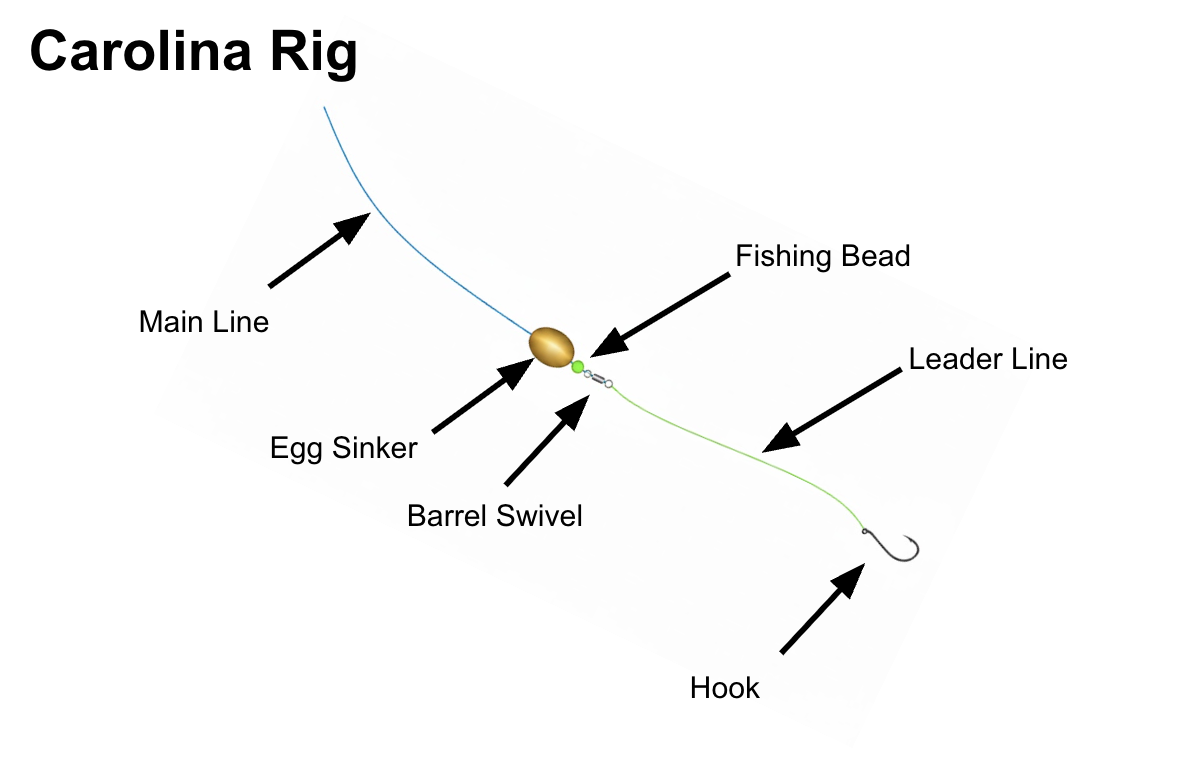
See the below table for an example gear setup for light tackle bait-and-wait fishing in Southern California. This is not the only setup, but it is among the most widely used when targeting perch or corbina.
| Fishing Gear | Specifications | Suggested Brands/Models |
|---|---|---|
| Rod | Length: 7'–9' · Power: M · Action: F | MF | Okuma SST, Hawaiian Custom, Okuma Rockaway |
| Reel | Size 3,000–4,000 | Penn Battle 3, Penn Fierce or Daiwa BG |
| Main Line | 10–20 lb monofilament | Any Berkley |
| Leader Line | 10–15 lb fluorocarbon | Any Berkley or Seaguar |
| Hook | Size #3–#5 J hook | Any Mustad or Gamakatsu |
| Weight | 3/4 oz–1 oz egg sinker | Any |
| Barrel Swivel | #2 or #1 | Any |
| Fishing Bead | 6mm–10mm | Any |
Heavy Tackle Setup
Dropper Loop (High-Low Rig): The dropper loop rig keeps your bait off the bottom, and as a bonus, fish will often hook themselves. The only complex part of this rig is learning how to tie a dropper loop — good news is, there are hundreds of tutorials online! The rig setup is simple: Main line → Barrel swivel → leader w/ dropper loop(s) → sinker — that's it!
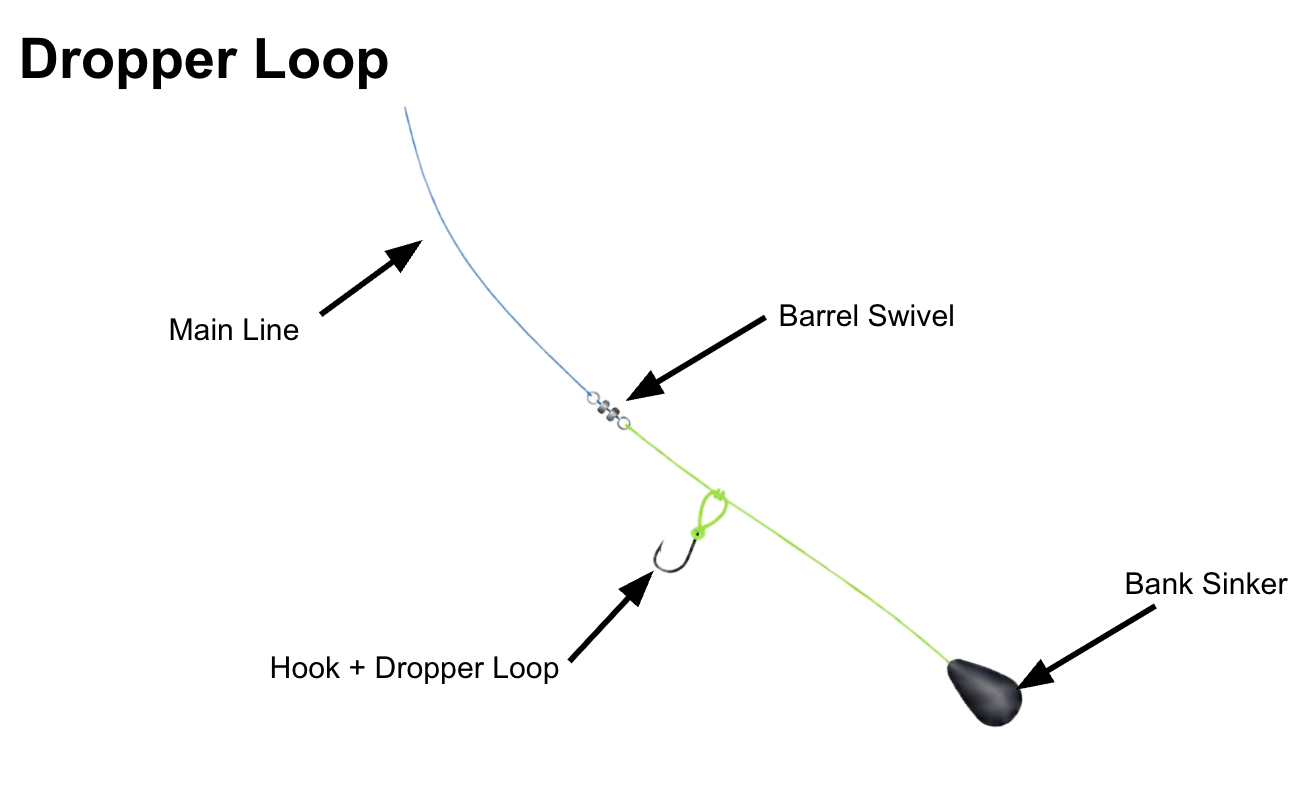
See the below table for an example gear setup for heavy tackle bait-and-wait fishing in Southern California. This is among the most widely used setups when targeting Rockfish, sheephead, and Cabezon.
| Gear Type | Specifications | Examples |
|---|---|---|
| Rod | Length: 11'–13' · Power: MH | H | Shimano SpeedMaster, PENN Battalion, Okuma Rockaway |
| Reel | Size 5,000–6,000 | Penn Battle 3, Penn Fierce or Daiwa BG |
| Main Line | 50–60 lb braid | Any |
| Leader Line | 40 lb monofilament or fluorocarbon | Any Berkley or Seaguar |
| Hook | 3/0 or 4/0 baitholder | Mustad or Gamakatsu |
| Weight | 4 oz–6 oz bank sinker | Any |
Lure Fishing
What is the best tackle setup for Lure Fishing?
Similar to bait-and-wait fishing, the ideal lure setup depends on your target species and fishing location. For example, most anglers will use a lighter setup when fishing in bays/harbors for smaller halibut or bass. As noted earlier, this article focuses on surf/beach fishing, which requires a slightly heavier setup.
Texas Rig: — Because you want to fish the structure (e.g., weeds, rocks, kelp, etc.), it's essential you use a weedless rig. This type of rig conceals the hook to help prevent snagging on the structure. One of the most common weedless setups is the Texas Rig due to its simplicity and versatility. Simply tie a weighted weedless hook directly to your line, then slip on the plastic lure of your choice — That's it!
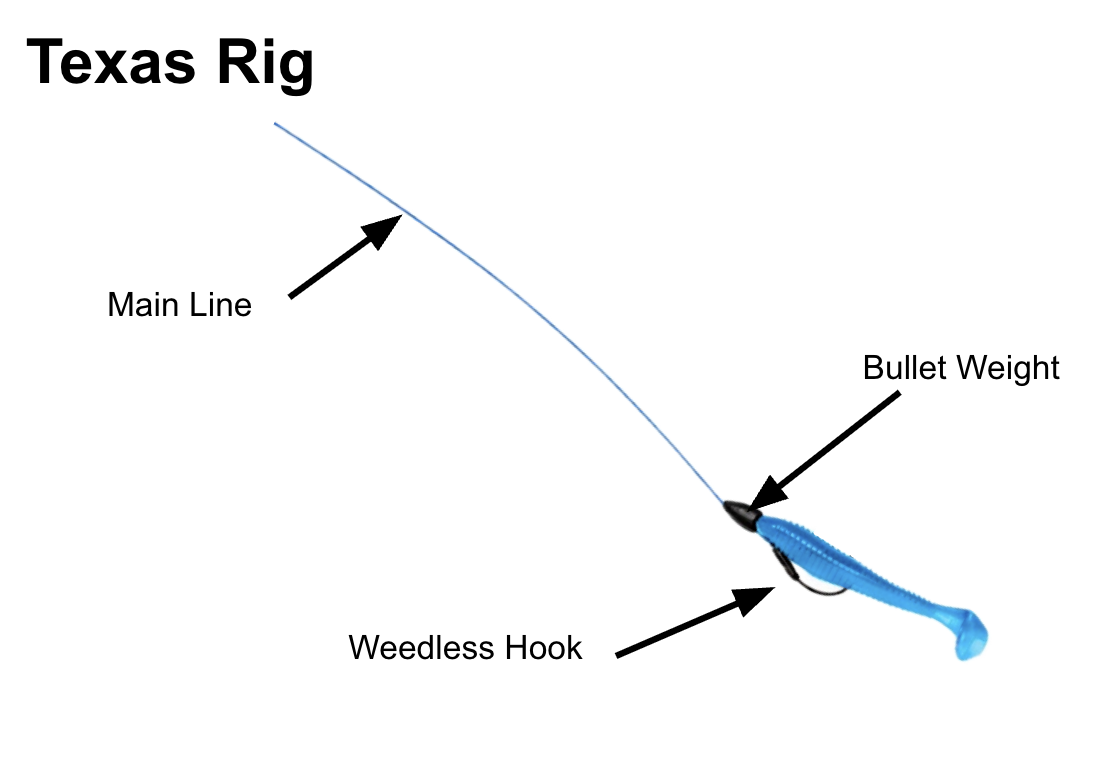
See the below table for an example gear setup for lure fishing in Southern California. This is among the most widely used setups when targeting halibut or bass.
| Fishing Gear | Specifications | Suggested Brands/Models |
|---|---|---|
| Rod | Length: 8'–10' · Power: MH · Action: MF | Okuma SST, Hawaiian Custom or Okuma Celilo |
| Reel | Size 3,500–4,500 | PENN Spinfisher VI, Penn Fierce or Daiwa BG |
| Main Line | 25–30 lb braid | Any |
| Swim Bait Size | 4"–5" | Keitech Fat Swing Impact, Battlestar Rib Bait |
| Weight | 3/8 oz–3/4 oz bullet weight | Any |
| Hook | 4/0–5/0 weedless hook | Any Mustad or Gamakatsu |
Where to Fish in Southern California
Where should I fish at the beach? How can I find structure?
As stated throughout this article, you need to find the structure. 3 main ways to locate structure:
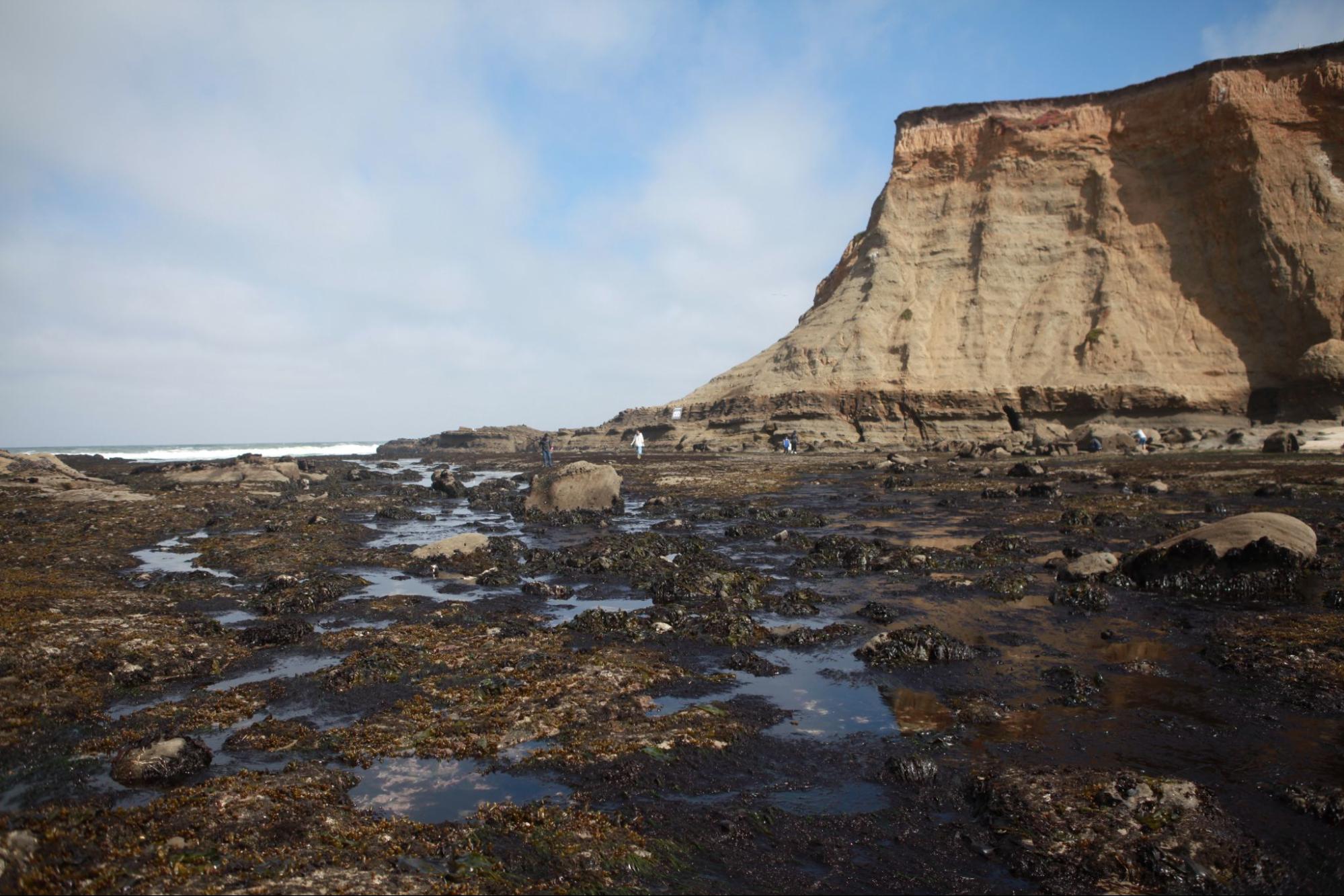
Low Tide Scouting
Walk the beach at negative tides and look for exposed rocky reefs and tidepools, then mark their locations. This tool will help you identify upcoming low tides.
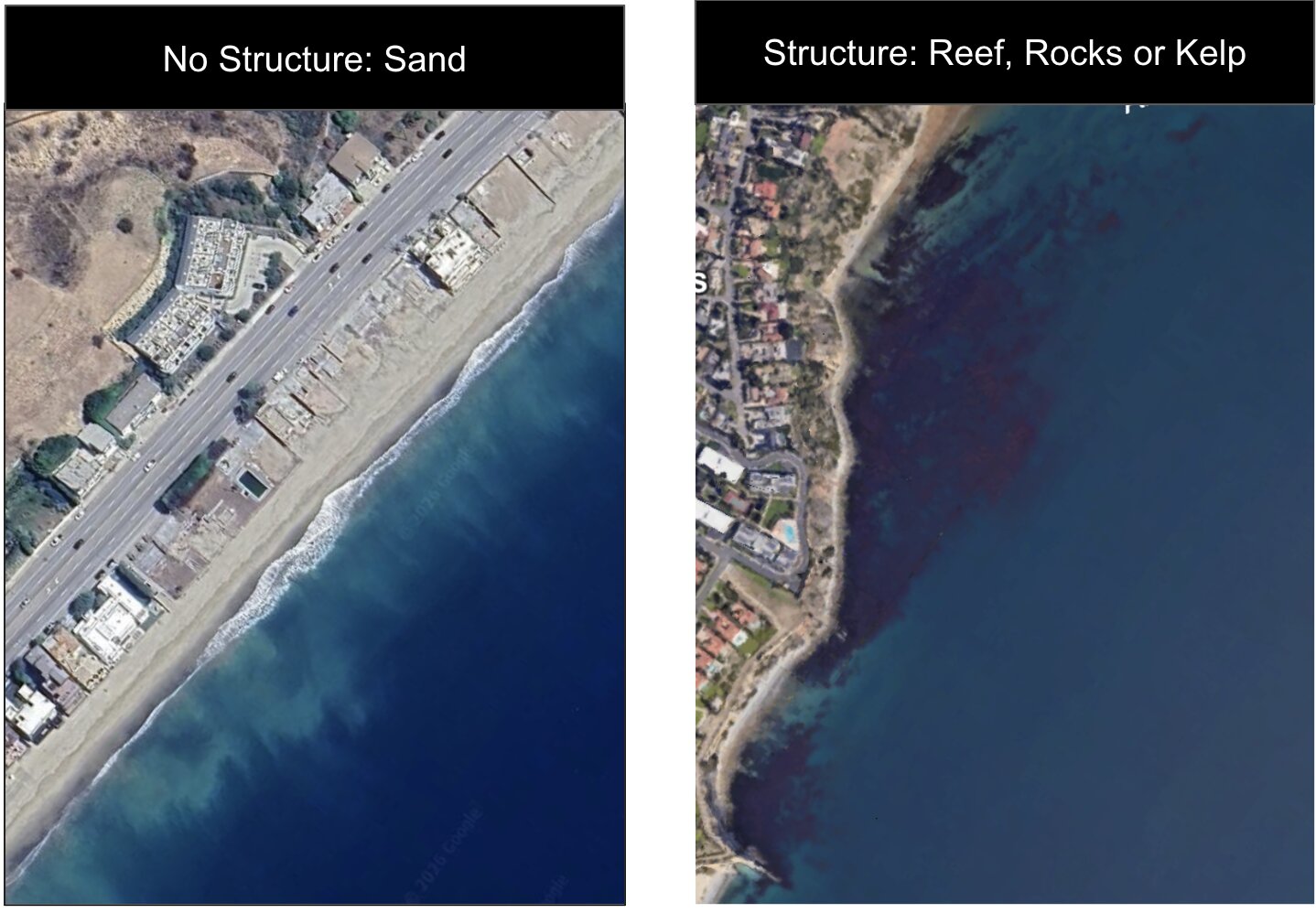
Google Earth
Google Earth is your friend. You can usually identify structure using the tool. Reefs and rocks will usually look like random dark patches in the water. SoCal locals Gary and Kaspar have written extensively about the Google Earth method, so we encourage you to check out what they have to say.
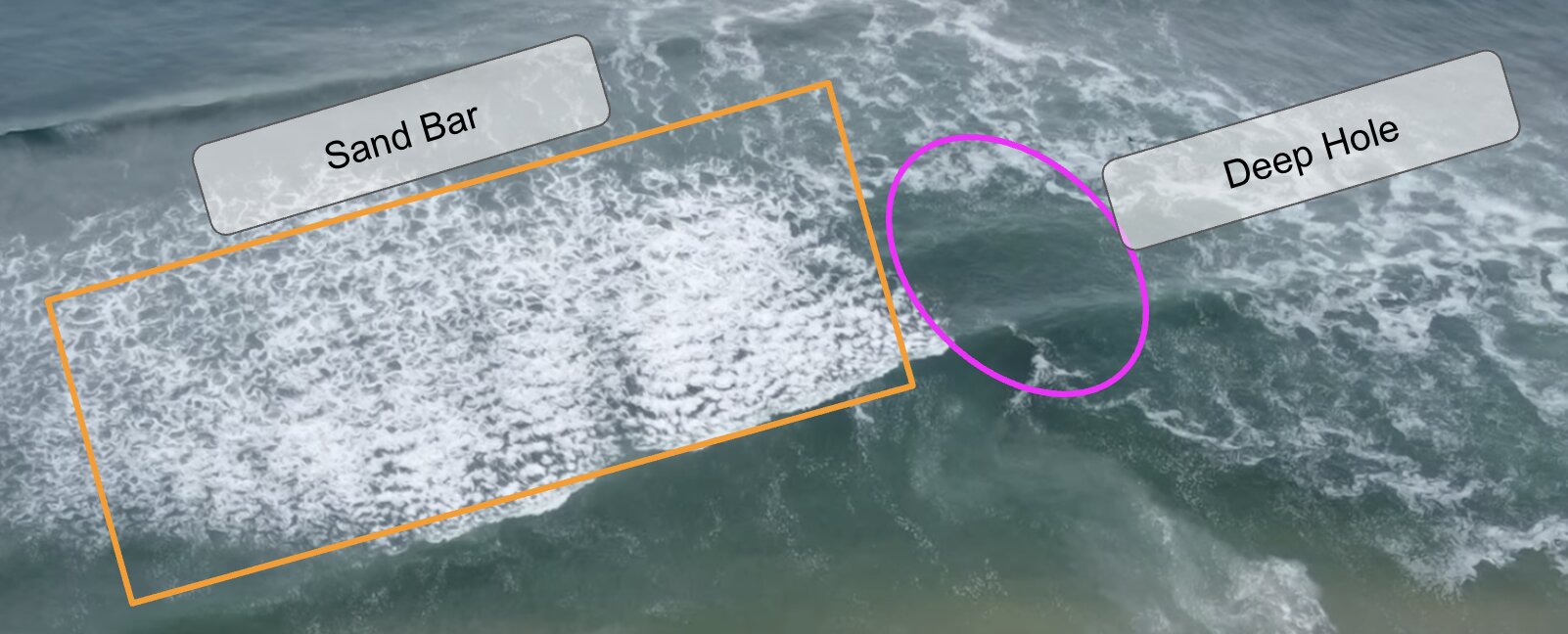
Read the Surf
This method is primarily for surf perch and croaker fishing. Perch like to hang out in deep water pockets, also known as scallops or troughs. You can identify these deep pockets of water by looking for the darker patches of water where fewer waves are crashing. SoCal fisherman Benjie Kim has a few good videos on reading the surf — this video is one of our favorites.
What to Fish and How to Fish Southern California
What bait should I use when bait-and-wait fishing?
If you're surf fishing for perch, croaker, or corbina, we recommend using sand crabs as they're free and abundant, but be sure to bring backup bait in case the sand crabs aren't around.
If you're planning to cast near rocky structures or reefs, we recommend using shrimp, squid, or mussels. These baits are universal and will catch fish pretty much anywhere.
What lure should I use?
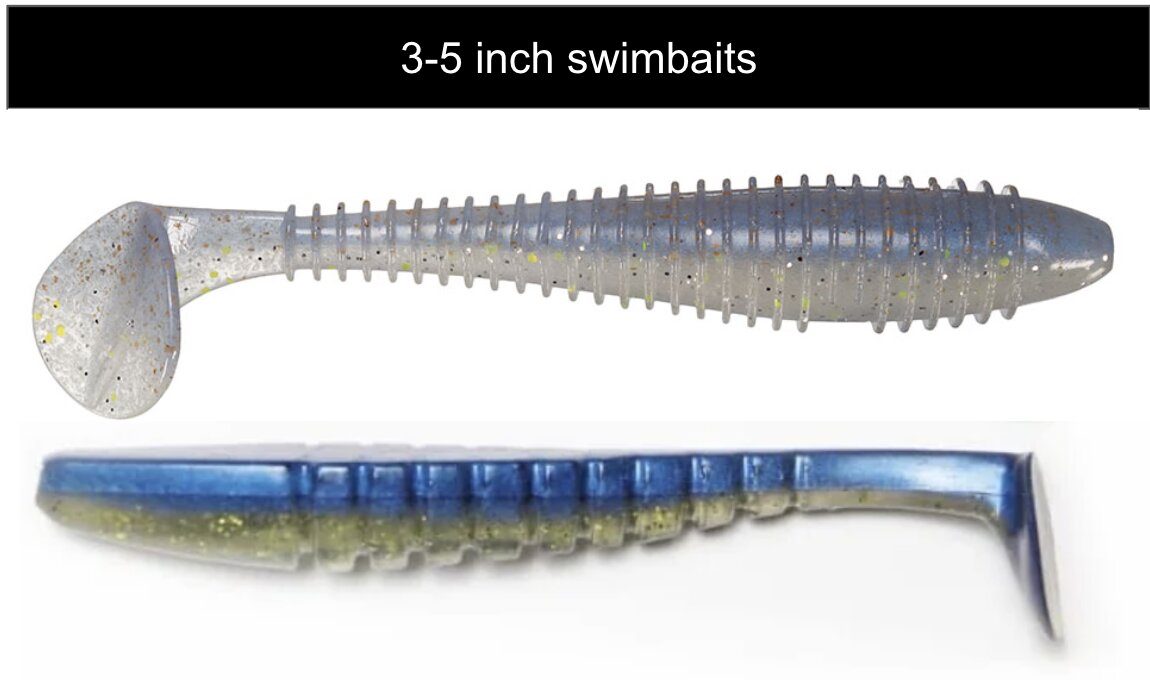
Most Southern California anglers attach a 3–5 inch paddle tail or a Keitech to their Texas rig. Alternatively, some anglers throw jerkbaits such as a Lucky Craft minnow, but new fishermen should stay away from jerkbaits since these lures tend to hook onto everything and require a little more finesse.
Where should I cast? How far should I cast?
While distance can matter, it's often less important than location. What truly matters is casting near structure. Once you've identified structure, your goal should be to thoroughly cover that area. If the reef extends far out, then yes, do your best to throw that sucker as far out as you can!
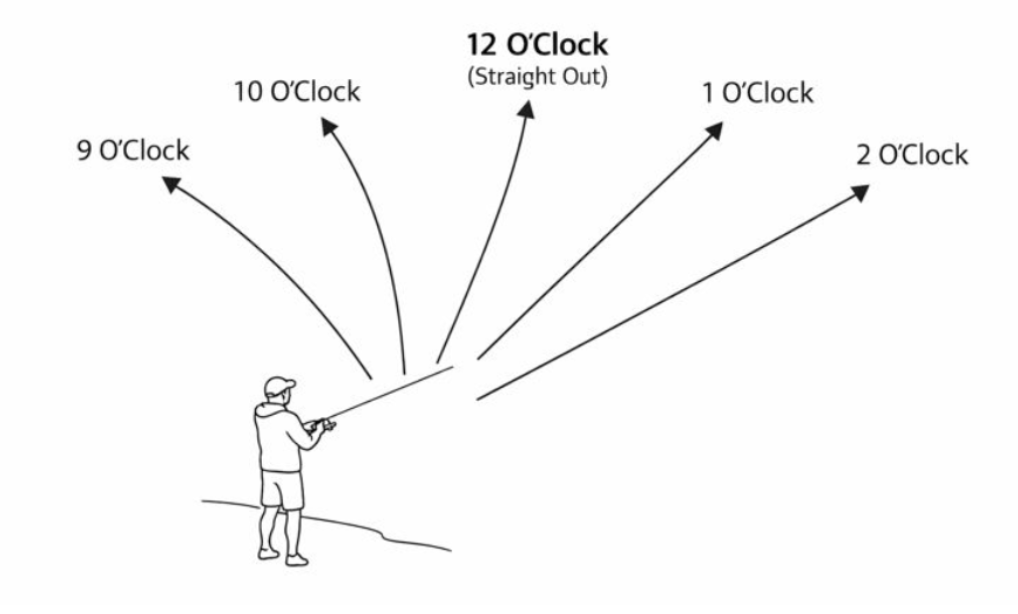
When bait-and-wait fishing, try casting directly on top of or just beside the structure. When fishing lures, factor in both distance and angles. One effective method is fan casting — plant your feet and make a series of casts in different directions to systematically cover water.
How fast should I retrieve my lure or swimbait?
The better question is, how slow should I retrieve my lure? Southern California predatory fish, like Halibut and Calico Bass, tend to prefer a slow and steady retrieve, which means when reeling in, you should feel your lure's action/vibrations, your lure stays off the bottom, and your line stays tight. That said, feel free to test different speeds, and don't be afraid to include a few brief pauses during the retrieval. But always remember: when in doubt, slow down.
When to Fish Southern California
What is the best day and time to fish in Southern California?
In general, most people will tell you to fish early morning or before sunset. While this is a great rule of thumb, it's not the whole story: there are many other factors to consider that can impact your fishing success.
The best time to surf fish depends on variables like tides, wind speed, wind direction, swell height, swell period, water temperatures, barometric pressure, time of year, and even moon phases. If you're overwhelmed, you're not alone. Most new anglers see all those variables and say, "screw it," and go whenever they have time — which is a fair reaction but could leave you with a lackluster day.
Some variables can have outsized impact on the day's fishing; for example in Southern California, we will never leave the house without checking the tides and wind speed across various beaches.
Tides
Tides need to be one of the variables you check before heading out. Tides can push bait closer to shore, alter access to structure, and influence feeding activity.
- Bait and Wait: In SoCal, the higher the tide the better! High tide covers inshore reefs, enabling large predatory fish to swim closer to shore.
- Lure: Unlike bait and wait, lower tides are better for lure fishing. Low tides expose reefs that aren't accessible during normal or high tides, meaning you'll have more structure to cast at.
Wind Speed
Wind speed is critical for many reasons. Too much wind, and you'll have a hard time casting, feeling your bait/lure, and keeping your line tight. Wind also creates choppy surf and can make it difficult to see your bait/lure. Overall, wind can make or break your fishing experience, so it should always be one of the first things you check before heading out.
- Bait and Wait: The lighter your tackle, the more wind affects your ability to fish. With 12ft rods, 50lb braid, and a 5 oz sinker, you can tolerate winds exceeding 12 or 15 mph. But less wind is always better. You'll have a more pleasant time.
- Lure: Because you'll be casting frequently and using light to medium tackle, wind has a significant impact. We recommend lure fishing only when wind speed is under 7 mph. Other factors like wind direction play a role, but for now, try to fish when the wind is below 7 mph.
And keep in mind — wind and tides are just two of the many variables that matter. Swell height, swell period, water temperature, barometric pressure, and moon phase all play a role. Even if you learn to read all of them, the traditional approach means juggling multiple websites: Surfline for swell data, Windy for wind speeds, one of 20 different tide sites for tides — then trying to piece it all together yourself before deciding whether it's worth driving to the beach.
That's exactly the problem we built FishNotify to solve. Instead of bouncing between tabs and cross-referencing data, you get every condition — tides, wind, swell, water temp, barometric pressure — pulled from the most trusted sources (NOAA, ECMWF, WMO) and presented for any beach in the world, in seconds. And if you're newer to fishing and don't fully understand what all these conditions mean yet, that's fine — our algorithms analyze them for you and score each day so you can see at a glance whether it's worth going out.
Is today a good day to fish your spot?
Type in any SoCal beach and get a full 7-day forecast with daily scores, tide charts, wind breakdowns, and more — so you can stop guessing and start catching.
- Daily fishing score for any beach
- 7-day forecast with tides, wind, swell & more
- Free to use!